+86-18367343973

 English
 Español
 عربى
عربى
Article Directory
- 1 What Travertine Flex Stone Veneer Is
- 2 Material Quality and Composition Factors
- 3 Substrate Bonding, Adhesive Selection, and Joint Detailing
- 4 Freeze-Thaw Resistance, UV Stability, and Exterior Ratings
- 5 Fire Classification, Impact Resistance, and Maintenance
- 6 Installed Cost, Batch Control, and Supply Chain Risk
- 7 Specification Checklist for Commercial Projects
- 8 Frequently Asked Questions
Ask any facade contractor to price a 2,000 m2 lobby wall in 18 mm travertine tile, and the estimate will include structural reinforcement or a heavier slab: full-body stone weighs roughly 40 kg/m2. Travertine flex stone veneer removes that penalty. It is genuine quarried travertine, sliced into 2-3 mm layers and laminated onto a flexible polymer-fiber backing, so the installed cladding weighs near 2.5 kg/m2. The specification decision is not about taste. It comes down to measurable factors: veneer thickness consistency, backing integrity, substrate bond, freeze-thaw performance, fire classification, and batch traceability.
What Travertine Flex Stone Veneer Is
Travertine flex stone veneer is a real-stone cladding sheet produced by slicing natural travertine blocks into thin layers and bonding those layers to a flexible mesh or polymer backing, so the panel can wrap columns and curved walls without cracking.
Production starts at the quarry. Diamond wire saws cut travertine blocks into thin strata, the stone face is reinforced with a resin-impregnated fiberglass mesh, and the composite is cured and calibrated to a uniform thickness. Standard commercial formats include 600 x 1200 mm and 1000 x 2400 mm sheets, with the stone layer between 2 and 3 mm thick.
Because travertine is a hot-spring limestone, its surface shows the pits left by gas bubbles. Suppliers deliver the material filled (pores closed with mineral grout) or unfilled. That choice changes cleaning routines, sealing frequency, and outdoor durability.
Flex stone veneer: a composite wall cladding with a natural stone face 1-3 mm thick bonded to a flexible backing, which allows installation on curved or radius surfaces where rigid tile would need segmentation and heavy steel framing.
Material Quality and Composition Factors
Verify that the visible surface is genuine quarried travertine, then inspect three measurable properties: thickness uniformity, backing tensile strength, and surface fill treatment.
Some materials described as flexible stone are actually printed PVC or SPC sheets with a photographic travertine film. They imitate surface texture but cannot replicate the depth of natural veining, and they will not chip or age like stone. The data sheet should state explicitly that the product contains real quarried travertine.
Thickness consistency controls joint alignment. A 3 mm sheet that varies by 0.5 mm across its width produces lippage at every seam, so accept material only within 0.3 mm of the nominal value. The backing layer controls flexibility and tear resistance. A brittle fiberglass mat cracks along tight radii; a polymer-reinforced mesh keeps the stone intact on bends down to a 100 mm radius.
A 3 mm flex travertine panel weighs about 2.5 kg/m2. A 20 mm traditional travertine tile with adhesive weighs about 40 kg/m2 - a 16-fold difference in dead load on the same wall area.
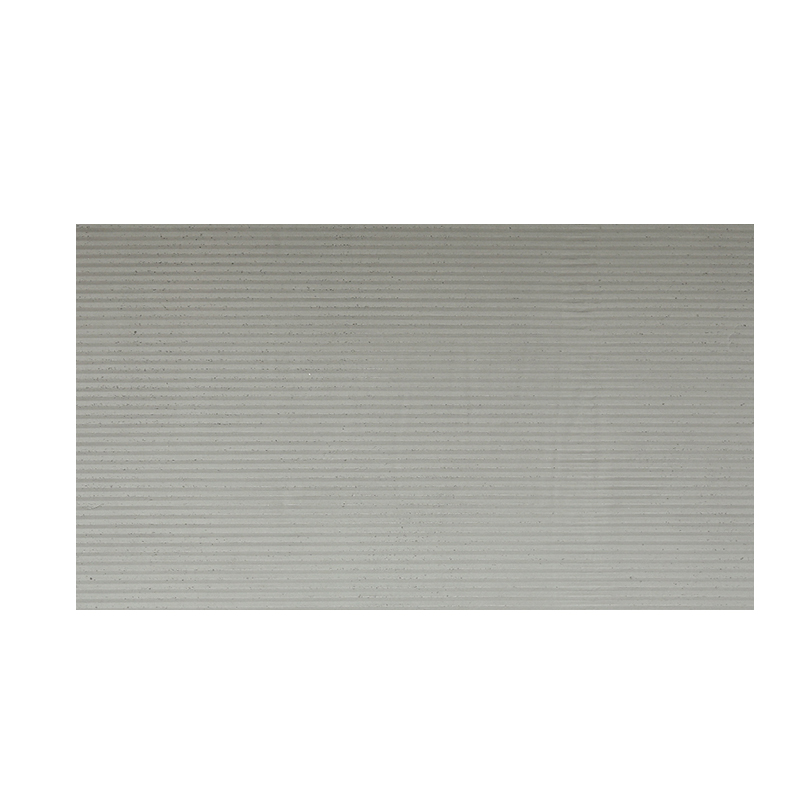
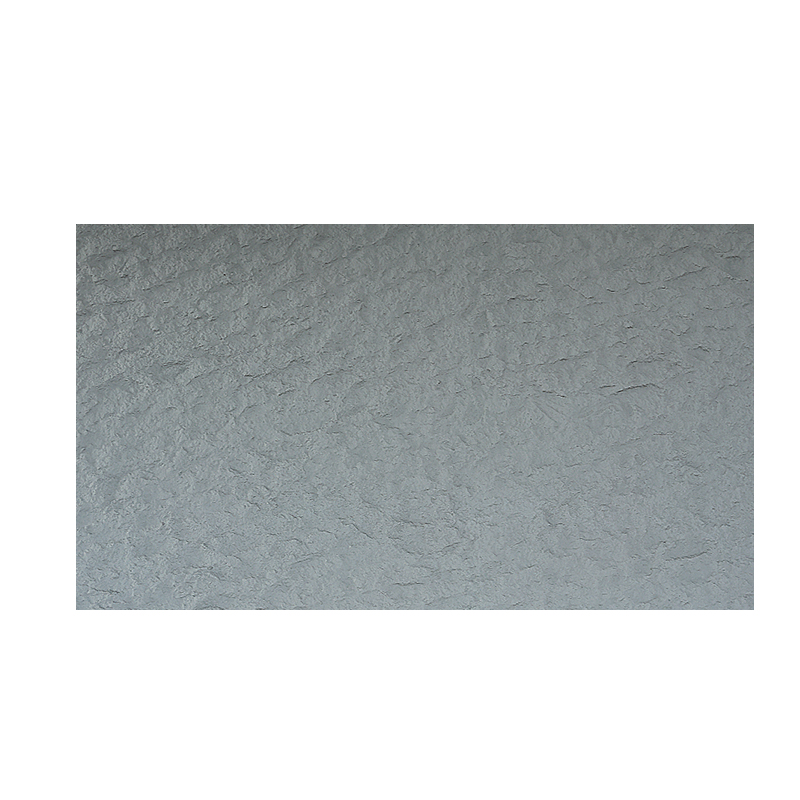
 Waterproof Grey Flexible Stone Panels for Interior Wall CladdingThis lightweight, waterproof grey stone veneer panel suits moisture-prone interiors and curved surfaces. Its uniform thickness helps avoid lippage, while the neutral tone blends easily across large wall installations.View Product →
For interior dry applications, a filled grey travertine flexible sheet is the most forgiving choice: the closed pores resist spills, the surface accepts standard stone sealers, and the neutral tone is easier to match across large wall runs.
Substrate Bonding, Adhesive Selection, and Joint Detailing
The most common commercial failure is adhesive failure, not stone failure: a flex veneer wall is only as durable as the substrate surface and the adhesive system chosen for that specific environment.
Suitable substrates are flat, dry, structurally sound surfaces: cured cement plaster, cement board, gypsum drywall, or thoroughly scuffed ceramic tile. Flatness must hold within 3 mm over a 2 m straightedge. Loose paint, efflorescence, dust, and oily residues all break the bond.
- Inspect the substrate for flatness and moisture content.
- Prime porous surfaces with a bonding primer.
- Mix the flexible thin-set mortar in clean water.
- Apply a 6 mm notched trowel over one workable section.
- Press the veneer sheet into the adhesive, working from the center outward.
- Roll the sheet flat to expel trapped air.
- Grout or seal the joints after the adhesive cures.
- Apply a sealer to filled travertine surfaces.
For exterior and wet zones, specify a flexible thin-set mortar classified C2TE under ISO 13007. For interior dry rooms, a solvent-free acrylic polymer adhesive is sufficient. Back-butter the sheet, press from the center out, and run a pull-off test on the first panel of each zone to confirm the bond.
Flatness rule: if a 2 m straightedge lifts more than 3 mm off the wall, level the substrate first. Flexible stone will not bridge a hollow spot, and unsupported areas are the first to crack under impact.
The complete substrate preparation sequence, including priming and trowel selection for each substrate type, is documented in the installation guide for flexible stone veneer panels.
Freeze-Thaw Resistance, UV Stability, and Exterior Ratings
Exterior-grade travertine flex veneer must pass freeze-thaw cycling, hold water absorption below roughly 3 percent by weight, and use UV-stable fillers; interior-only products will spall or delaminate if installed on an exterior facade.
The failure mechanism is straightforward. Moisture enters micro-pores in the stone, freezes, expands, and detaches the surface layer. A hydrophobic sealer combined with fully filled pores separates a 10-year facade from a one-winter failure. Request the manufacturer's test report: credible exterior sheets document 300 freeze-thaw cycles or more with no visible delamination, tested under a national standard such as GB/T or ASTM.
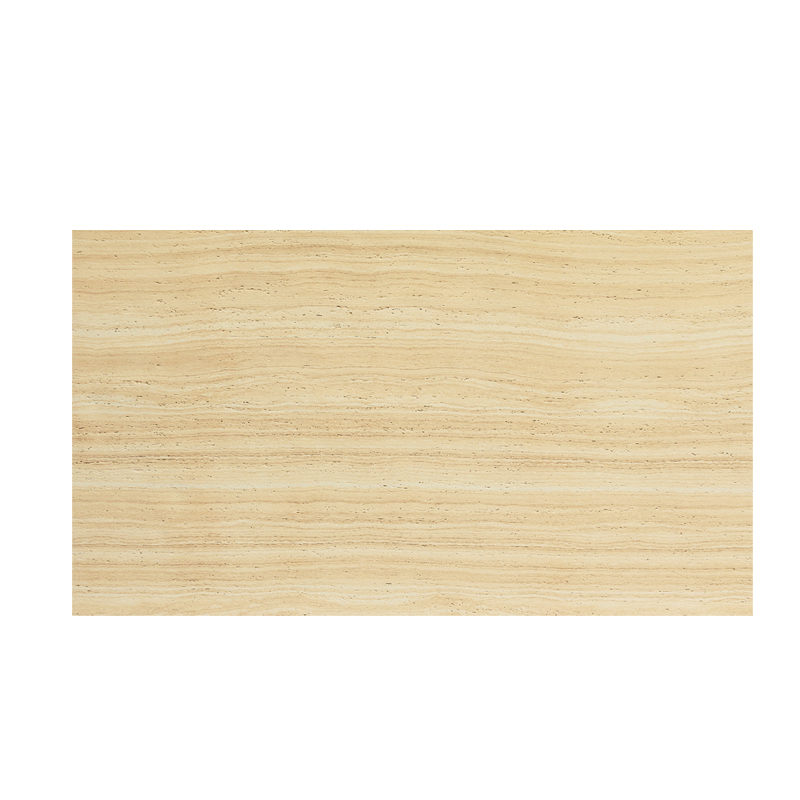 Outdoor Flexible Stone Sheet with Slip-Resistant Travertine SurfaceDesigned for exterior cladding, this flexible stone sheet combines real travertine stone with a composite backing for durability. It withstands freeze-thaw cycles and moisture, offering a lightweight alternative for facade applications.View Product →
UV exposure acts differently. Unfilled travertine gathers grime in its pits, while filled versions require fillers that do not yellow over time. For high-rise facades, the light weight is an advantage for dead load, but wind suction demands full-surface adhesive contact. Use the manufacturer's specified adhesive and complete pull-off tests at each elevation zone.
Exterior specification gate: filled surface, hydrophobic treatment, documented freeze-thaw test data, and an on-site pull-off adhesion result at or above 0.4 MPa before the main installation begins.
Application guidance for freeze-thaw-resistant flexible stone sheets explains the difference between interior and exterior product grades in more detail.
Fire Classification, Impact Resistance, and Maintenance
The natural stone face will not burn, but the polymer-fiber backing governs the composite's reaction-to-fire classification, so confirm the system certificate - typically EN 13501-1 class B or A2 - before approving the panel for a commercial building.
Impact resistance is the honest trade-off. A 2-3 mm stone layer cracks under a hard blow from a trolley or furniture, where 18 mm tile would survive. Specify 3 mm panels in corridors and entrances, protect external corners with metal or rubber edge guards, and budget for spot-patching small chips.
Maintenance cadence is predictable. Sealed travertine veneer accepts a neutral-pH cleaner and a microfiber cloth. Re-seal every 12-24 months in lobbies, shops, and food-service areas. Keep movement joints open and flexible; never fill them with rigid epoxy.
| Metric | Flex travertine veneer | 18 mm travertine tile | Printed SPC/PVC panel |
| Real stone surface | Yes, 2-3 mm layer | Yes, full thickness | No, photographic film |
| System weight | ~2.5 kg/m2 | ~40 kg/m2 | ~2-4 kg/m2 |
| Curved surface wrap | Yes | No | Yes |
| Fire classification | B or A2 (system tested) | A1 | B or C |
| Exterior freeze-thaw | Exterior-grade only | Good with correct install | Limited |
| Repairability | Spot patch and reseal | Replace tile | Replace panel |
| Installed cost level | Medium | High | Low |
Maintenance rule: one neutral-pH cleaner, one microfiber cloth, one annual sealer pass. Acidic descalers and pressure washers will damage the travertine face permanently.
Installed Cost, Batch Control, and Supply Chain Risk
Flex travertine material prices sit close to mid-range travertine tile, but the installed system typically costs 20-40 percent less because the work requires no stone cutting, no heavy-setting mortar, and no structural reinforcement.
The labor math is where the savings appear. One installer with a helper can fix 15-25 m2 of flex veneer per day, while traditional tile installation with cutting, leveling, and grouting usually reaches 5-8 m2 per installer-day. On a 500 m2 wall, that difference shortens the schedule by several weeks.
Relative scale: traditional 20 mm tile values set to 100 percent
Thickness - flex veneer (3 mm)
Thickness - traditional tile
Weight - flex veneer (2.5 kg/m2)
Weight - traditional tile
Natural stone is a batch product. Block-to-block variation means a re-order next year will not match the first shipment. Order 5-8 percent spare material from the same production batch, store it flat and dry, and ask the supplier to mark batch numbers on every carton. For phased projects, ask the manufacturer - Haining Yunxi New Material Technology Co., Ltd. (Yunxi) is one such producer with a factory catalog - to reserve the same lot for later phases.
16xlighter than solid tile per m2
20-40%lower installed cost
2-3 mmtotal veneer thickness
300freeze-thaw cycles, exterior grade
Supply-chain rule: buy 5-8 percent extra from the same batch and keep it for repairs. Exact color rematching after a year is not commercially available.
Specification Checklist for Commercial Projects
A complete commercial specification locks down the veneer construction, surface fill, fire certificate, freeze-thaw evidence, adhesive, and batch traceability in writing before purchase.
- Genuine quarried travertine face, 2-3 mm nominal thickness within 0.3 mm tolerance
- Polymer-reinforced fiberglass backing with manufacturer tensile data
- Filled and sealed surface for exterior use; honed or filled face for interiors
- Fire classification certificate matching the local building code class
- Freeze-thaw test report for every exterior installation
- Adhesive type, trowel size, and pull-off test requirement in the tender documents
- Joint width, grout type, and movement joint spacing
- Batch traceability and spare-stock quantity defined in the supply contract
A wall specified this way is predictable. Leave any of these eight items open, and the gap will be filled by the lowest bidder's interpretation - usually a product that fails the freeze-thaw test.
Frequently Asked Questions
Use these answers as a first pass; the manufacturer's data sheet and the local building code remain the authority.
Is travertine flex stone veneer real stone?
Yes. The visible surface is natural travertine sawn into a 2-3 mm layer and bonded to a flexible backing. It is not a photographic film. The data sheet should state the stone type and quarry origin.
What adhesive is required for commercial walls?
For exterior and wet areas, use a flexible thin-set mortar classified C2TE. For interior dry rooms, a solvent-free acrylic polymer adhesive is enough. Apply with a 6 mm notched trowel, back-butter the sheet, and run a pull-off test on the first panel of each zone.
Can flexible travertine sheets be used on exterior facades?
Only an exterior-rated grade, with filled pores, hydrophobic treatment, and documented freeze-thaw performance. Interior-only sheets will spall or delaminate within one or two winter cycles.
How much weight does flex travertine save compared with traditional tile?
About 94 percent. A 3 mm flex veneer at 2.5 kg/m2 weighs far less than a 20 mm tile with adhesive at roughly 40 kg/m2. On a 500 m2 wall, the difference is about 18,750 kg of avoided dead load - often enough to delete structural reinforcement from the budget.