+86-18367343973

 English
 Español
 عربى
عربى
Article Directory
- 1 What Makes PVC Soffit Panels the Best Choice for Roof Overhangs
- 2 Does Soffit Need to Be Vented? The Code Requirements and Why It Matters
- 3 Do Soffit Vents Need Screens? Pest Entry and Protection Standards
- 4 Does Vinyl Soffit Come in Colors? Full Range and Matching Guidance
- 5 Is PVC Fascia Good? Performance Against Wood and Aluminum
- 6 Installing PVC Soffit Panels: Sequence, Fasteners, and Key Rules
Quick Answers
Does soffit need venting? Yes — in most climates
Do vents need screens? Yes — pest entry prevention
Vinyl soffit colors? Yes — 20+ standard options
Is PVC fascia good? Yes — superior to wood
Complete Guide
A PVC soffit panel is the most maintenance-free, weather-resistant solution for enclosing the underside of roof overhangs. Unlike wood, it will not rot, warp, or require painting — and unlike aluminum, it does not dent or corrode. Properly vented PVC soffit protects attic spaces from moisture accumulation and heat buildup while blocking pests year-round.
25–30
year
Typical PVC soffit service life with zero repainting
1:150
ratio
Min. net free vent area to attic floor area (IRC R806)
20+
colors
Standard color options across major vinyl soffit lines
Overview
What Makes PVC Soffit Panels the Best Choice for Roof Overhangs
PVC (polyvinyl chloride) soffit panels are extruded thermoplastic boards designed specifically for horizontal installation under eaves and overhangs. Their cellular or solid PVC construction makes them dimensionally stable across temperature extremes from -30°C to +60°C, resistant to moisture infiltration at 0% water absorption, and immune to the insect damage and fungal rot that limits wood soffit to 10–15 year service cycles.
The structural performance gap between PVC and competing materials is measurable:
| Property | PVC Soffit | Wood Soffit | Aluminum Soffit | Fiber Cement |
|---|---|---|---|---|
| Water absorption | 0% | 8–15% | 0% | 0.5–2% |
| Rot / fungal risk | None | High | None | Low |
| Paint required | Never | Every 5–8 yr | Rarely | Every 8–12 yr |
| Dent / impact resistance | Good | Good | Poor | Excellent |
| Insect resistance | Excellent | Poor | Excellent | Good |
| DIY installation | Easy | Moderate | Easy | Difficult |
| Typical lifespan | 25–30 yr | 10–15 yr | 20–25 yr | 25–30 yr |
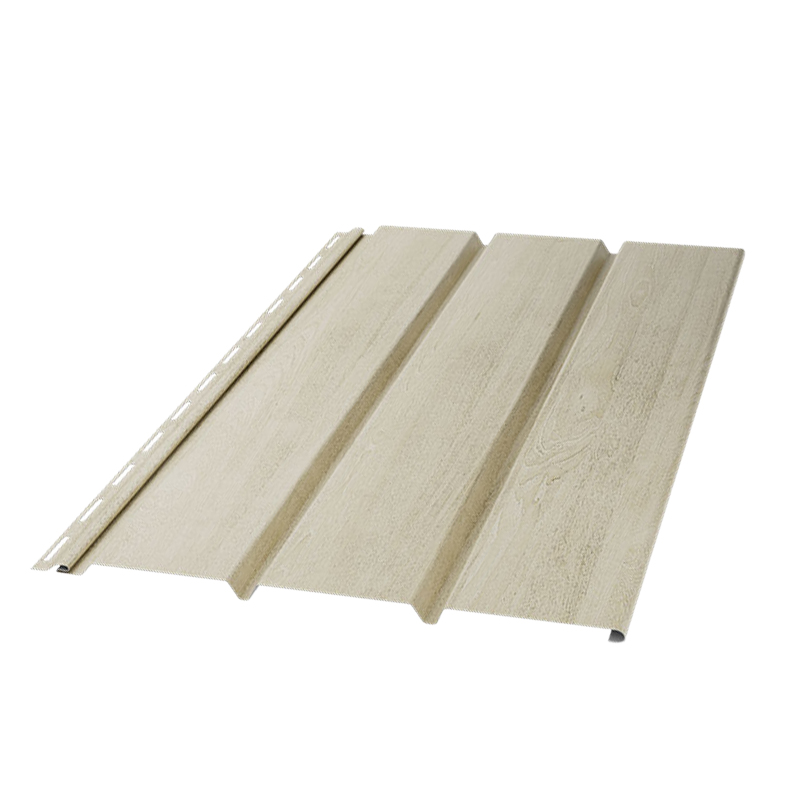
Two product variants address different installation requirements. Solid PVC soffit provides a flat, unperforated panel used in areas where ventilation is handled separately (ridge and gable vents). Vented or perforated PVC soffit integrates ventilation slots or micro-mesh directly into the panel face, distributing fresh air intake evenly across the entire overhang length.
Ventilation
Does Soffit Need to Be Vented? The Code Requirements and Why It Matters
Yes — in virtually all residential construction in temperate and cold climates, building codes require attic ventilation. The International Residential Code (IRC) Section R806 mandates a minimum net free ventilating area of 1/150 of the attic floor area, reduced to 1/300 if at least 40% of the required venting area is placed at or near the ridge. Soffit vents provide the low-intake portion of this balanced ventilation system.
The physics behind ventilation requirements directly impacts building longevity:
Summer Heat Buildup
An unvented attic under a dark roof surface can reach 65–80°C (150–175°F) on a 35°C (95°F) summer day. At these temperatures, asphalt shingles degrade 2–3x faster than on a vented attic. Soffit-to-ridge airflow reduces peak attic temperature by 10–15°C, extending shingle life by 5–8 years per roofing industry studies.
Winter Moisture & Ice Dams
Warm air escaping from living spaces heats the attic floor, melting snow on the roof above. Meltwater runs down to the cold eave, refreezes, and builds ice dams that force water under shingles. Continuous soffit ventilation keeps attic air near outdoor temperature, eliminating the temperature differential that causes ice dam formation. In northern climates, ice dam repair averages $500–$3,000 per event.
Moisture & Mold Prevention
Household activities generate 8–12 liters of water vapor daily. Even well-insulated vapor barriers allow some moisture into attic space. Without ventilation, relative humidity in sealed attics regularly exceeds 70% — the threshold for mold colonization on wood framing. A single mold remediation event in an attic costs $1,500–$6,000 depending on affected area.
The only exceptions where unvented soffits are code-compliant: spray-foam insulated conditioned attic assemblies where the entire roof deck is inside the thermal envelope, eliminating the unconditioned attic space that creates moisture and heat differentials. In all conventional attic-over-insulation designs, vented soffit is required.
Pest Control
Do Soffit Vents Need Screens? Pest Entry and Protection Standards
Yes — soffit vents should always incorporate screens or integrated mesh. The International Building Code (IBC Section 1203.5) and most state building codes require corrosion-resistant wire mesh with openings no larger than 3.2 mm (1/8 inch) on all attic ventilation openings to prevent pest entry. Unscreened soffit vents are one of the most common entry points for squirrels, bats, birds, wasps, and carpenter bees into attic spaces.
Integrated Mesh (Built-in)
Premium PVC soffit panels for vented applications incorporate factory-installed fiberglass or aluminum mesh directly behind the vent slots during extrusion. Mesh opening size is typically 1.6–3.0 mm, compliant with building codes for exclusion of insects down to wasps and large beetles. This is the preferred specification — it cannot be omitted during installation and requires no field cutting or separate installation step.
Mesh standard: 18x16 mesh (fiberglass) or 18x14 (aluminum) per IRC R806.1
Add-On Insect Barrier
Solid or unscreened vented soffit panels can be retrofitted with roll-form aluminum insect barrier installed in the attic behind the vent openings. This is a common remediation step in older homes where original screens have corroded or were never installed. Barrier roll width should exceed the soffit panel width by 50 mm on each side to ensure full coverage without gaps at panel joints.
Install requirement: staple or nail every 150 mm; overlap joints 50 mm minimum
Bat exclusion requires particular attention — bats can enter through gaps as small as 9.5 mm (3/8 inch). Standard 3.2 mm mesh excludes bats, but any gap at the panel-to-fascia junction or at inside corners larger than 9.5 mm provides access. Pest management professionals consistently identify soffit gap closure as the single most effective bat exclusion measure in residential buildings.
Aesthetics
Does Vinyl Soffit Come in Colors? Full Range and Matching Guidance
Yes — vinyl and PVC soffit panels are available in an extensive color range, and the color is co-extruded or continuously pigmented through the material rather than applied as a surface coating. This means the color does not chip, peel, or require refinishing across the product's lifespan. Major manufacturers offer 20–40 standard colors and can produce custom colors via special-order minimum quantities.
Standard color families and their typical applications:
Bright White / White
Universal — matches most trim and fascia; most popular color
Almond / Cream
Warm-toned homes; pairs with tan, beige, and brick siding
Sandstone / Linen
Neutral for earth-tone exteriors; popular in southern climates
Clay / Pebble
Mid-tone neutral; transitional and craftsman style homes
Sage / Celery
Accent color for green and nature-palette exteriors
Slate / Charcoal
Contemporary and modern homes; dark exterior color schemes
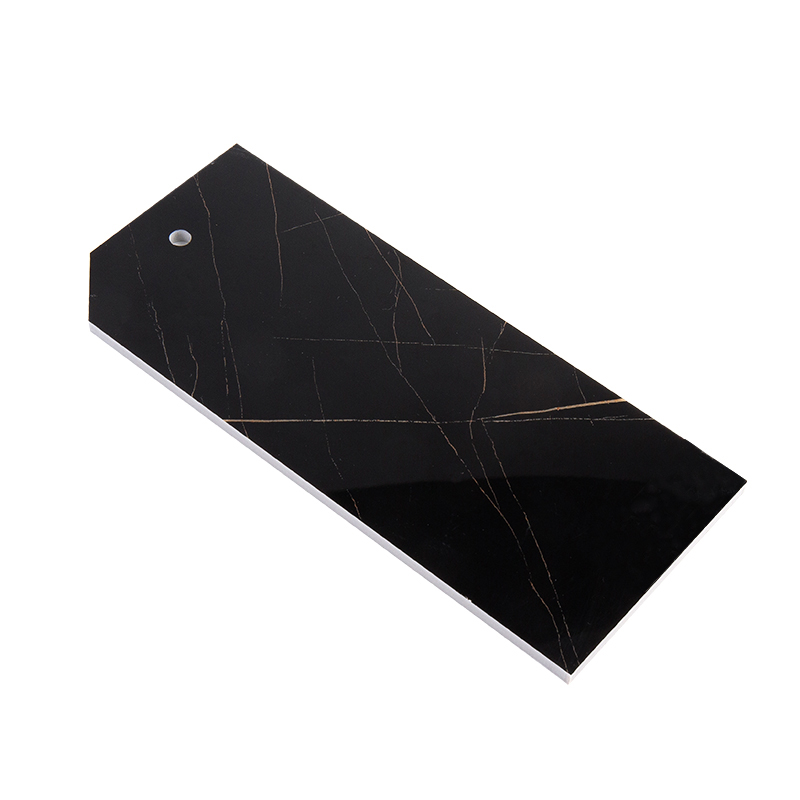
Black / Midnight
Bold modern design; industrial and farmhouse aesthetics
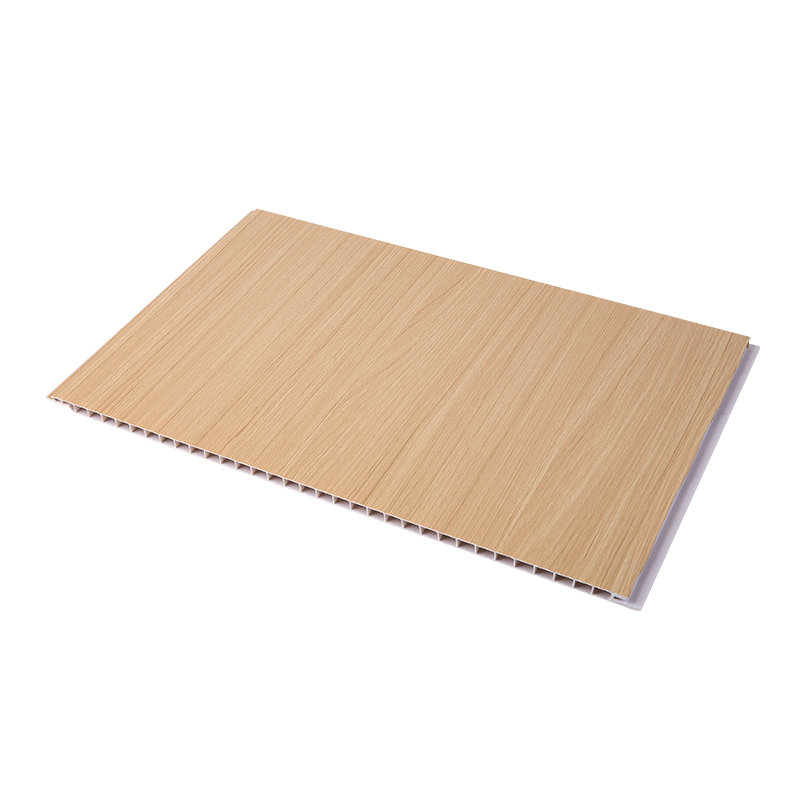
Woodgrain / Cedar
Embossed wood-texture finish; traditional and cottage style
One important selection note: dark-colored PVC soffit absorbs more solar radiation than light colors, raising the material temperature by 8–15°C above ambient on summer days. While PVC soffit is rated for temperatures up to 60°C, thermal expansion in dark panels in hot climates should be accounted for in installation — allow 6 mm expansion gap per 3 m panel length in colors darker than medium gray (L* value below 60 on the CIELAB scale).
Fascia
Is PVC Fascia Good? Performance Against Wood and Aluminum
Yes — PVC fascia is genuinely superior to wood in every performance category relevant to exterior trim, and competitive with aluminum in durability while being substantially easier to work with. The case for PVC fascia rests on five concrete advantages, particularly in humid, coastal, and temperature-extreme environments where wood fascia fails within 5–8 years without aggressive maintenance.
Zero rot risk at gutter attachment points: The most common fascia failure mode is rot where gutters trap water against the fascia face. Water-saturated wood fascia behind gutters begins delaminating within 3–5 years in wet climates. PVC fascia absorbs zero water — gutter attachment points remain structurally intact for the product's full service life without sealant maintenance.
Paint elimination: A 150 mm wide wood fascia requires repainting every 5–8 years — a labor-intensive job requiring ladder access, surface preparation, primer, and two topcoats. PVC fascia with co-extruded color requires no painting across its service life. On a 1,800 mm perimeter home with 300 mm gutter overhang, the paint elimination value equals approximately $800–$1,400 per repainting cycle avoided.
Direct wood cap-over installation: Cellular PVC fascia boards (19 mm thick) are commonly installed directly over existing deteriorated wood fascia, eliminating the tear-off and disposal cost. The PVC board encapsulates the old wood, sealing the surface from further moisture infiltration and restoring visual appearance without structural demolition. This capping method is compliant with most building codes when the existing wood substrate is sound enough to accept fasteners.
Workability with standard tools: Unlike fiber cement (which requires carbide saw blades and generates silica dust) and aluminum (which requires tin snips or specialized cutters), PVC fascia cuts cleanly with a standard circular saw or miter saw using standard wood-cutting blades. Field joints are bonded with PVC cement for an invisible seam — no visible gaps or caulk lines.
Insect immunity: Carpenter bees drill into wood fascia to create nesting galleries — a problem particularly common in cedar and pine trim. A single carpenter bee infestation can bore 15–20 holes in a fascia run over one season, requiring wood filler, sanding, and repainting. PVC fascia provides zero nesting attraction and cannot be penetrated by carpenter bee boring.
The primary limitation of PVC fascia: thermal expansion. PVC expands approximately 5 mm per 3 m length per 28°C temperature change. On long uninterrupted fascia runs in high-temperature climates, wavy appearance can develop if installation gaps are not provided at joints. Always follow manufacturer expansion gap tables — typically 3 mm at 10°C and 6 mm at 25°C ambient during installation.
Installation
Installing PVC Soffit Panels: Sequence, Fasteners, and Key Rules
PVC soffit installation follows a defined sequence that determines whether the finished result is tight and stable or prone to sagging, buckling, or wind uplift. The critical variable most installers underestimate is thermal expansion — a 3.6 m panel will change length by approximately 6 mm between winter installation at 0°C and peak summer temperature at 45°C.
01
Install J-Channel at Wall and Fascia
Nail J-channel to the wall sheathing and to the fascia board at the outer edge. Channel opening faces inward. Allow 6 mm gap between J-channel ends at inside corners — do not butt tight. Fasten every 400 mm with corrosion-resistant nails or stainless screws.
02
Cut Panels 6–12 mm Short of Span
Measure the clear span between J-channel slots. Cut panel 6 mm shorter than this measurement (12 mm in hot climates above 35°C peak ambient). This expansion gap allows unrestrained growth without buckling. Never cut panels to exact span width.
03
Fasten at Center of Slot
PVC soffit panels have pre-punched fastening slots, not holes. Drive nails or screws through the center of each slot — not at the end. Fastening at slot ends prevents the panel from moving and forces thermal expansion into the panel face as a buckle. One fastener per rafter tail or 400 mm maximum spacing.
04
Orient Vented Panels Correctly
Vented soffit panels are directional — vent slots should face the prevailing wind direction to maximize intake airflow. In most North American climates, orienting slots perpendicular to the wall (running from wall to fascia) provides optimal ventilation. Check that integrated mesh is facing inward (toward attic) to prevent mesh from being visible from below.
Fastener specification: use hot-dipped galvanized, stainless steel, or aluminum nails only. Standard bright steel nails cause rust staining on PVC within 2–3 seasons — a cosmetic defect that cannot be cleaned and requires panel replacement. Screw installation (stainless #8 x 32 mm) provides superior wind uplift resistance and is recommended in coastal zones or areas with sustained wind exposure above 140 km/h.
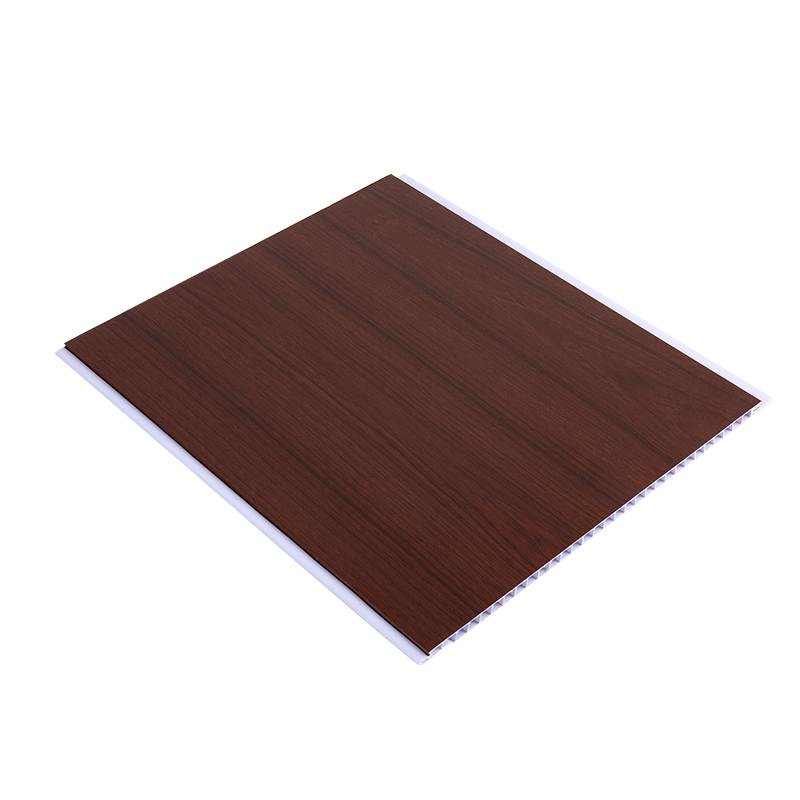
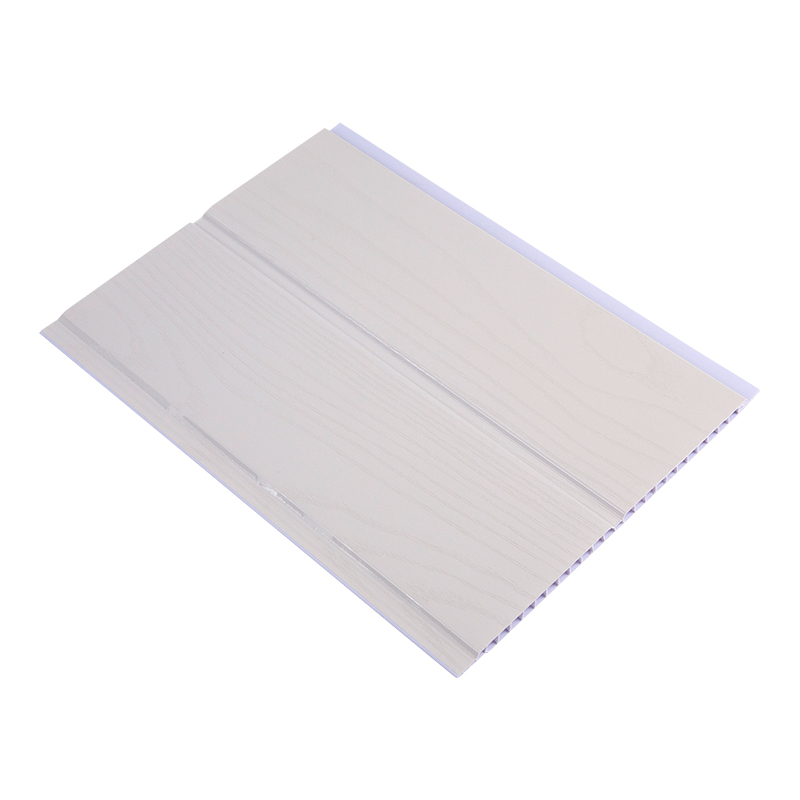
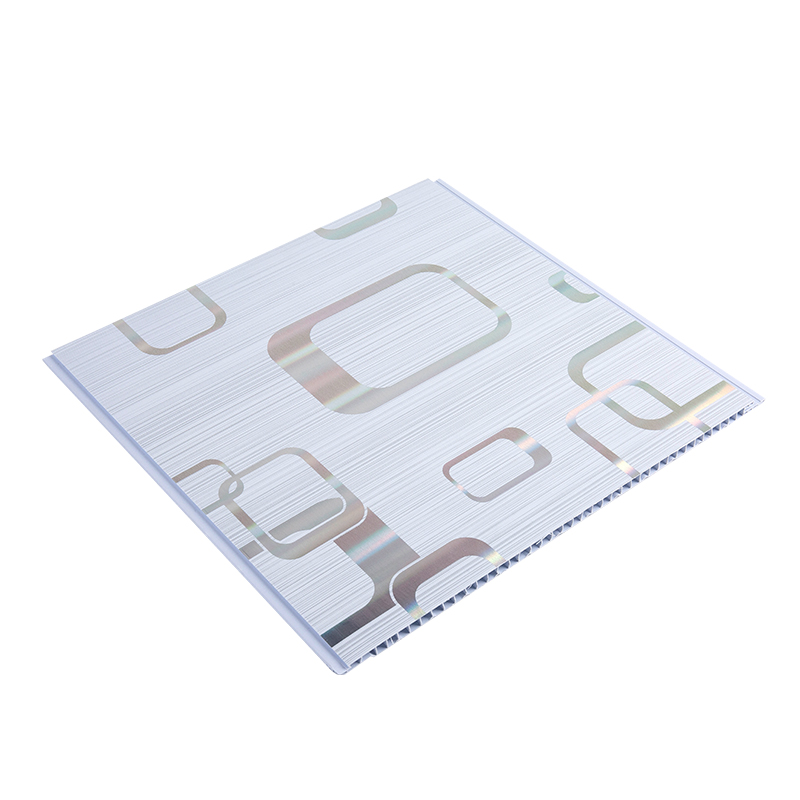
Browse the complete selection of PVC soffit panels including solid, vented, and woodgrain options across all standard widths and color ranges.
At-a-Glance Specification Reference
Standard PVC soffit panel parameters for residential and light commercial use
Standard Widths
150 mm, 200 mm, 250 mm, 300 mm, 400 mm
Panel Thickness
1.5 mm – 4.0 mm (solid); 10–25 mm (cellular)
Standard Length
3.0 m, 3.6 m, 4.8 m, 6.0 m
Net Free Vent Area
3.5 – 7.5 cm²/linear ft (vented panels)
Temp. Range
-30°C to +60°C operating
Mesh Standard
18×16 (fiberglass) / 18×14 (aluminum)
Fastener Spacing
Max 400 mm on center
Color Method
Co-extruded / through-body pigment
Expansion Gap
6 mm per 3 m panel at 20°C install temp