+86-18367343973

 English
 Español
 عربى
عربى
Article Directory
Picture a backyard deck after a heavy rain. If the boards cannot shed water and air cannot move underneath, the surface stays damp, the substructure collects moisture, and fasteners wear long before they should. WPC hollow decking is designed to avoid that chain of events. It works because three things happen at once: the composite material resists moisture, the hollow profile reduces weight without giving up stiffness, and the installation system leaves room for ventilation, drainage, and thermal expansion.
What Is WPC Hollow Decking Made Of?
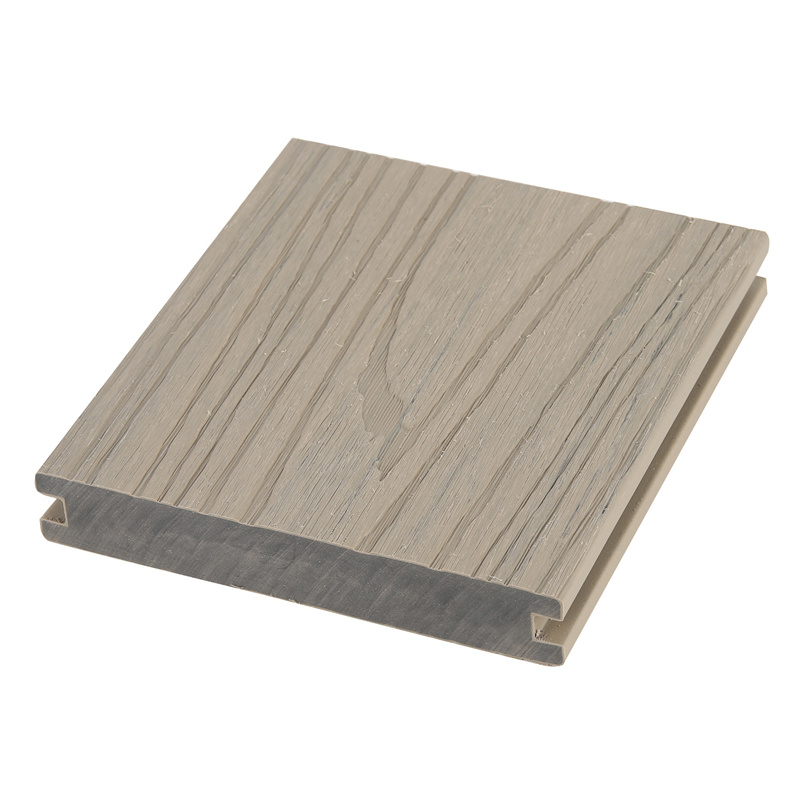
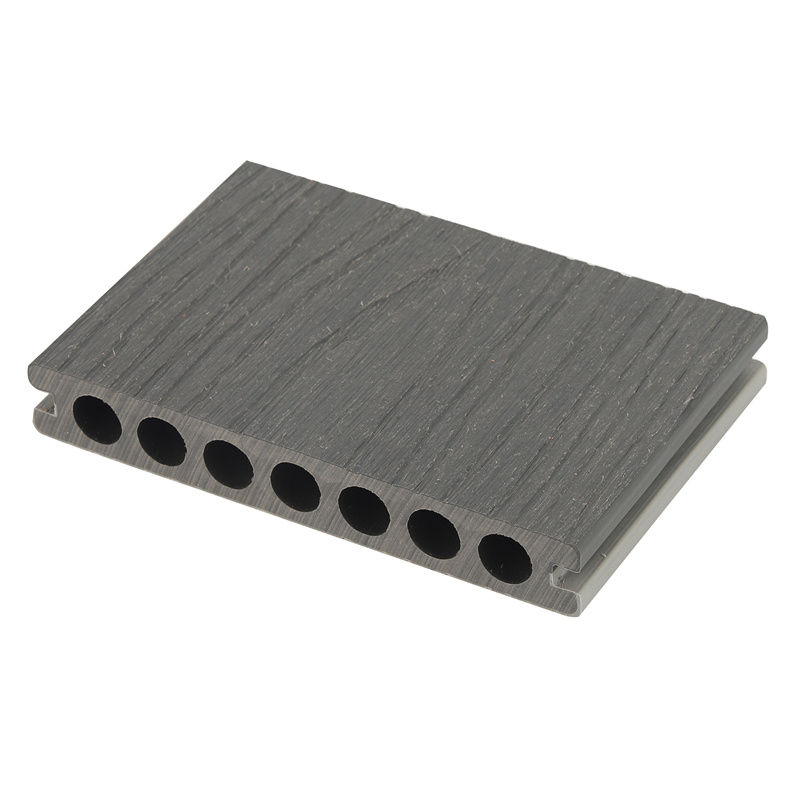
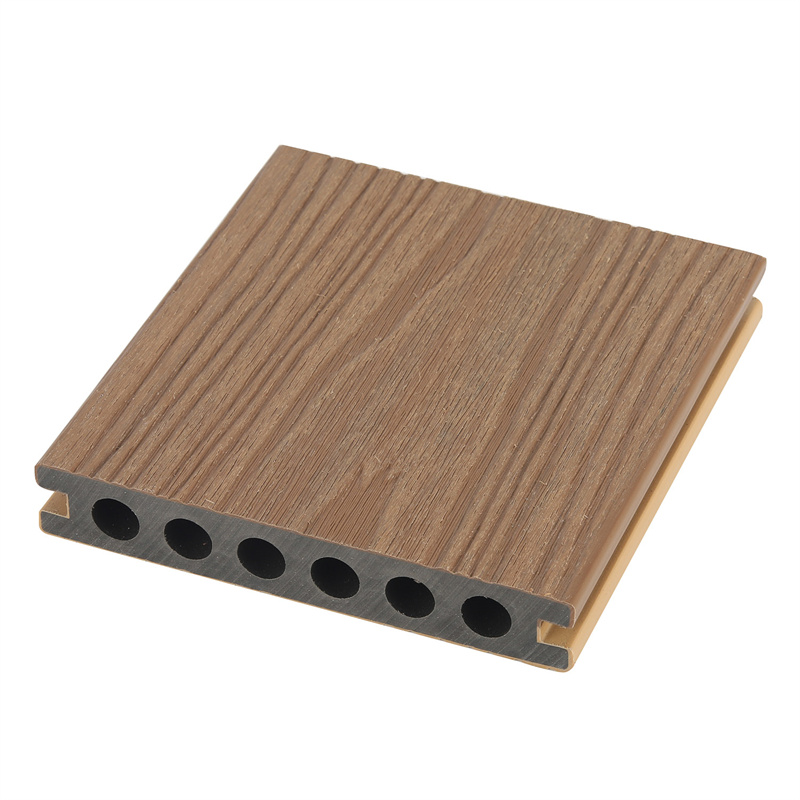
WPC hollow decking is a composite board made from wood fiber, thermoplastic polymer such as polyethylene or polypropylene, and additives that improve UV resistance, color stability, and processability. The material is mixed, melted, and extruded into long profiles with a distinctive cross-section. Instead of being completely solid, the board contains several internal cavities created by vertical webs and horizontal skins.
Those cavities are not just a way to cut material cost. They make the board lighter, reduce the amount of raw material needed per meter, and lower the load that the substructure has to carry. When the profile is designed correctly, the hollow structure also helps the deck dry faster after rain because there is less material mass holding moisture. The same material system used in WPC wood-plastic composite board forms the basis of many hollow and solid WPC decking profiles.
| Characteristic | Solid WPC decking | Hollow WPC decking |
|---|---|---|
| Material used per meter | Higher | Lower |
| Handling weight | Heavy | Lighter |
| Typical bending stiffness | Derived from the full cross-section | Derived from skins, webs, and overall profile depth |
| Drying behavior after rain | Takes longer to dry | Dries faster when gaps and airflow are provided |
| Cost position | Higher material cost | More economical, but performance varies widely by profile |
How the Hollow Profile Works Structurally
A hollow WPC deck board behaves like an engineered beam. When a load presses down on the deck, the top skin is compressed, the bottom skin is pulled into tension, and the vertical webs transfer shear forces between them. This arrangement makes efficient use of material: the outer skins are positioned far from the neutral axis, where they contribute most to bending stiffness, while the hollow middle avoids carrying material that would do little work.
That is why profile depth and wall thickness matter more than total weight. A well-designed hollow board with a deep section and properly sized internal webs can feel stiff underfoot, while a poorly designed hollow board with very thin skins can flex, bounce, and feel unsafe. The wall thickness and the number of internal chambers also affect screw holding, clip pullout strength, and resistance to impact from chair legs or dropped objects.
Why Joist Spacing Determines Load Performance
For a hollow WPC decking profile, the spacing of the substructure joists is the single most important installation variable. Reducing the span from 400 mm to 300 mm can roughly triple the stiffness of the deck under distributed load. That is why a profile that works on one project may fail on another if the joist spacing is changed.
| Use condition | Joist spacing, center-to-center | What to check |
|---|---|---|
| Residential deck with light foot traffic | 300–400 mm | Deflection under a typical 1.5 kN point load |
| Commercial terrace or restaurant area | 250–300 mm | Point load, impact resistance, fastener pullout |
| Roof terrace with heavy fixed furniture | 200–250 mm | Long-term creep and thermal movement |
Always ask the manufacturer or supplier for the deflection data for each profile. A hollow board that is fine at 300 mm centers might sag noticeably at 450 mm centers, no matter how well the material is formulated. The right joist spacing is not a general rule; it is a calculation based on the section geometry and the expected load.
How Ventilation, Drainage, and Expansion Work Together
Deck boards fail in two common ways: mechanical overload and moisture damage. Hollow WPC decking handles moisture by combining a water-resistant material with a substructure design that promotes airflow. The composite itself does not rot like solid wood, but trapped moisture behind the boards can still lead to mildew, slippery surfaces, and accelerated aging of clips or fasteners.
The enclosed hollow chambers inside the board reduce the amount of material that remains wet, but the main ventilation comes from the gaps between boards and the open space below. A correct installation leaves a small side gap and a slightly larger end gap, allowing rainwater to fall through and letting air circulate under the deck. This is critical in shaded areas, near garden soil, or in climates with frequent rain.
Leaving Room for Thermal Movement
WPC has a higher coefficient of thermal expansion than natural wood. When a hollow deck board heats up in direct sun, it lengthens more than a timber board would. The hollow profile helps because it reduces the total material mass and can lower internal stress, but it cannot replace expansion gaps.
As a practical starting point, many hollow WPC deck installations use a side gap of 4 to 6 mm and an end gap of 8 to 10 mm. The exact values depend on the profile, the color of the board, and the local climate. Dark-colored boards in hot regions need more allowance than light boards in temperate climates. Hidden clips with sliding slots allow the deck board to expand without pushing against its neighbors.
What a Correct Hollow Decking Installation Looks Like
Hollow WPC decking works only when the supporting structure gives it three things: level support, a drainage slope, and air space. The substructure is usually made from aluminum or composite joists, which are more stable than untreated framing lumber. The joist top surface should be flat and aligned so that each deck board receives continuous support at every fastening point.
- Set composite or aluminum joists at the spacing shown in the profile’s load table.
- Slope the substructure by 1–2% so water runs off rather than pooling.
- Leave side gaps, end gaps, and an open perimeter to maintain airflow.
- Use hidden clips or an approved face-screw pattern that allows thermal movement.
- Keep the ends of the boards slightly raised or fully supported so they do not become a water trap.
Surface fastening is faster but leaves screw heads exposed. Hidden clips are more common for hollow decking because they eliminate exposed hardware and allow the board to move more freely. The clip system also makes the deck easier to clean and safer under bare feet. Contractors who have installed other exterior WPC profiles, such as structural composite fencing profiles, will recognize the same need for controlled expansion and proper backing support.
What to Check Before Buying Hollow WPC Decking
Hollow decking is often positioned as the economical choice, but a cheap profile can fail under point loads or lose color after a few seasons. The price difference between a good hollow board and a poor one is usually small compared with the cost of replacing the deck surface. Buyers should compare engineering data, not just profile shape.
- Ask for a cross-section drawing and the actual wall thickness of the top skin, bottom skin, and webs.
- Request a load and deflection table showing the maximum joist spacing for residential and commercial use.
- Check whether the board is a homogeneous profile or a capped, co-extruded profile with a protective outer layer.
- Review the manufacturer’s water absorption, UV fade, and freeze-thaw test data.
- Confirm the warranty terms and what type of substructure the warranty requires.
A capped or co-extruded WPC decking profile has a dense outer layer that protects the core from UV light, moisture, and abrasion. That layer is especially valuable for hollow profiles because it reduces cracking around fastener points and improves color retention. The production approach used for co-extruded WPC panels for exterior architecture explains why the cap layer can make such a large difference in long-term appearance.
The Bottom Line
Hollow WPC decking works when it is treated as a system, not as a single board. The material resists moisture, the hollow profile provides a strong stiffness-to-weight balance, and the installation method delivers the ventilation, drainage, and expansion space that the deck needs. Choose the right profile, confirm the load data, and set the joist spacing correctly, and a hollow WPC deck can deliver many years of stable outdoor service.