+86-18367343973

 English
 Español
 عربى
عربى
Article Directory
When a buyer orders WPC decking for a 2,000-square-meter commercial boardwalk, the first question is rarely about color. It is about whether a hollow profile can handle the foot traffic, the climate, and the budget. Hollow and solid WPC decking look similar on the surface, but they are structurally different products with different load limits, weight, installation requirements, and price points. The choice changes how many joists you need, how fast crews can install it, and how long the deck will hold up under concentrated loads.
Solid WPC decking weighs 40–60% more per meter than hollow profiles and supports significantly higher point loads.
Hollow and Solid WPC Decking: Core Definitions
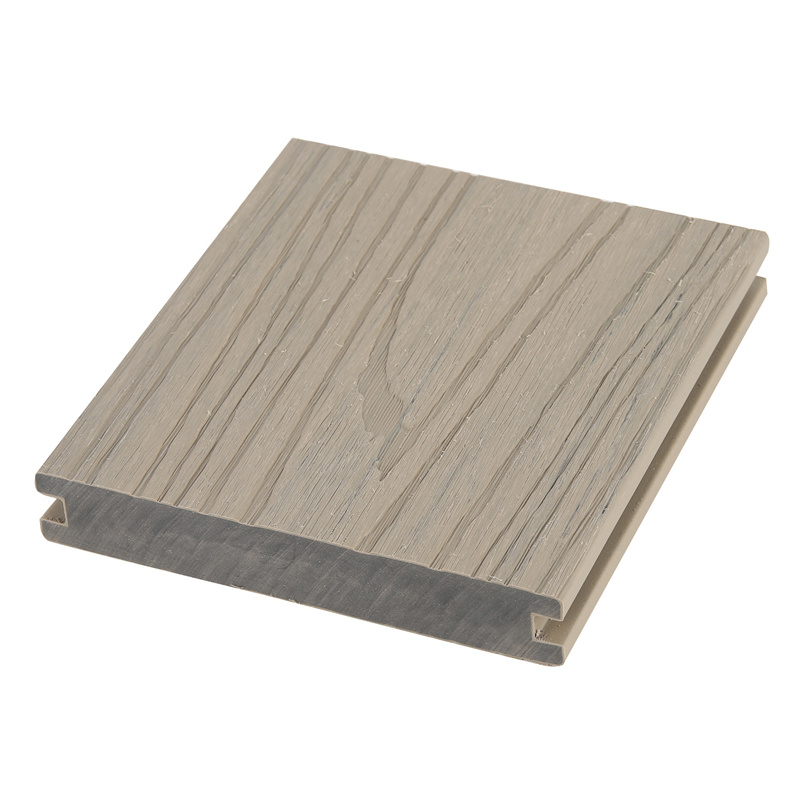
Hollow WPC decking uses an extruded profile with one or more internal channels running along the board length. Solid WPC decking is fully dense across its cross-section, with no air channels. Both are made from wood–plastic composite, typically recycled wood fiber and HDPE or PVC resin. The difference is geometry, not just weight.
Definition: A hollow WPC decking profile is an extruded board with internal voids that reduce material use and weight while maintaining a thick outer wall. A solid WPC decking profile has no internal voids, giving it a uniform, dense structure.
Why wall thickness matters as much as the void pattern
A hollow board with a 4 mm wall behaves very differently from one with a 3 mm wall under the same load. Check the product data sheet for wall thickness, not just the number of voids, because a poorly designed hollow profile can crack at fastener points or flex under concentrated load.
How the two profiles are extruded
Both profiles are made by co-extrusion in most modern factories. The outer layer is a polymer cap that resists UV and moisture, while the core section provides structural strength. Solid profiles require more material per meter, which directly increases raw material cost and finished weight.
Weight, Strength, and Cost: Quantified Differences
Solid WPC decking outperforms hollow decking on point-load resistance and fastener holding, while hollow decking wins on handling weight and material cost. The table below summarizes typical differences for a 150 mm-wide board.
| Property | Hollow WPC | Solid WPC |
| Weight per linear meter | 1.8–2.2 kg | 2.8–3.5 kg |
| Point load capacity | Moderate | Higher |
| Fastener holding strength | Lower | Higher |
| Price per square meter | Lower | Higher |
| Stiffness underfoot | Slight flex | Dense and stiff |
| Recommended joist spacing | 300–400 mm | 400–600 mm |
Key insight: The price gap between hollow and solid profiles narrows when you add extra joists, blocking, and hidden clips required for correct hollow-board installation. Always calculate the complete substructure cost, not just the deck board price.
Why Hollow and Solid WPC Decking Need Different Framing
Hollow profiles require tighter joist spacing in most installations because their unsupported spans are shorter. Solid profiles allow a wider spacing, which reduces framing labor and material costs on large projects.
- Hollow WPC: Use 300 mm spacing on residential decks and 300 mm or less on commercial decks. Install mid-span blocking for boards longer than 3 meters.
- Solid WPC: Use 400–500 mm spacing for residential projects and up to 600 mm for light commercial use. Verify the exact span rating from the manufacturer.
- Rooftop decks: Hollow profiles are easier to carry up because they weigh less, but the substructure must be level and tight.
- Fastener choice: Solid boards accept screws more securely and are less likely to strip during installation.
Use a mid-span support when installing hollow WPC decking on a commercial boardwalk. Without it, repeated foot traffic can cause permanent deflection around the internal void area.
How to Choose: Rooftop, Residential, or Commercial
Use hollow profiles for residential and rooftop projects where weight and budget matter most. Use solid profiles for commercial decks, elevated boardwalks, and areas with heavy concentrated loads such as outdoor furniture clusters or stage platforms.
Choose hollow WPC when
You are building a private garden deck, a rooftop terrace, or a balcony where the structural slab has a low load allowance. Hollow boards are lighter to transport, easier to cut on site, and more budget-friendly for straight runs.
Choose solid WPC when
You are installing a restaurant deck, a public boardwalk, or an elevated walkway. Solid profiles feel stiffer underfoot, hold fasteners more reliably, and resist permanent indentation from heavy furniture.
"When in doubt, select solid WPC decking for public spaces and hollow profiles for private decks. The extra cost of solid boards is justified by lower inspection risk and longer service life."
What to Verify Before Ordering WPC Decking
Co-extrusion, wall thickness, and raw material ratio define whether a hollow or solid WPC deck board will survive a decade outdoors. As a manufacturer, Haining Yunxi New Material Technology Co., Ltd. (Yunxi) applies the same extrusion and surface technology to a WPC coextrusion panel line that shares quality parameters with premium decking profiles. Another example is the wood-plastic board, which demonstrates how density and surface finish are controlled in a full-form profile.
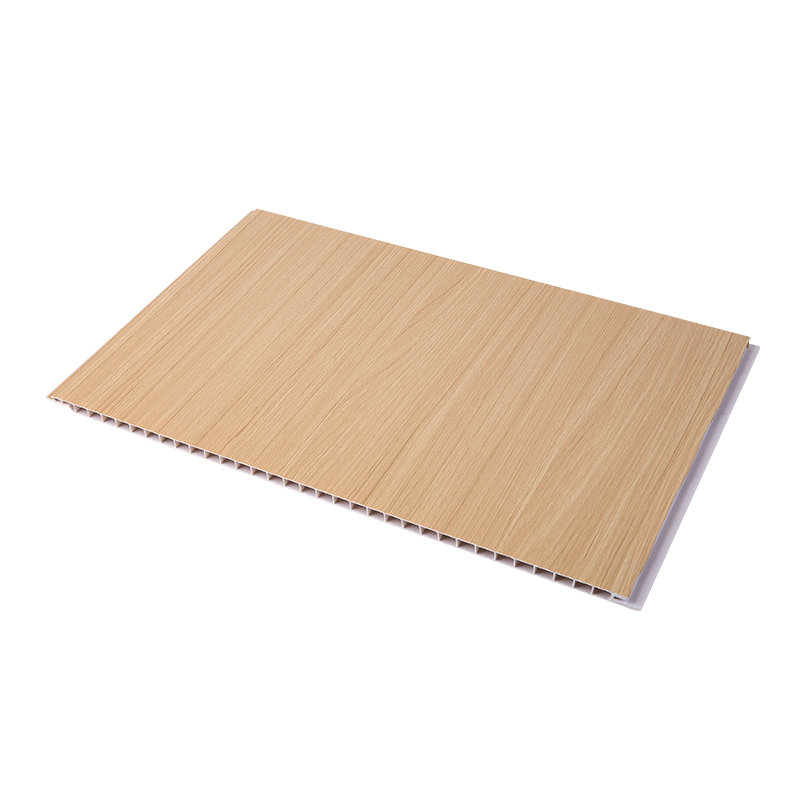
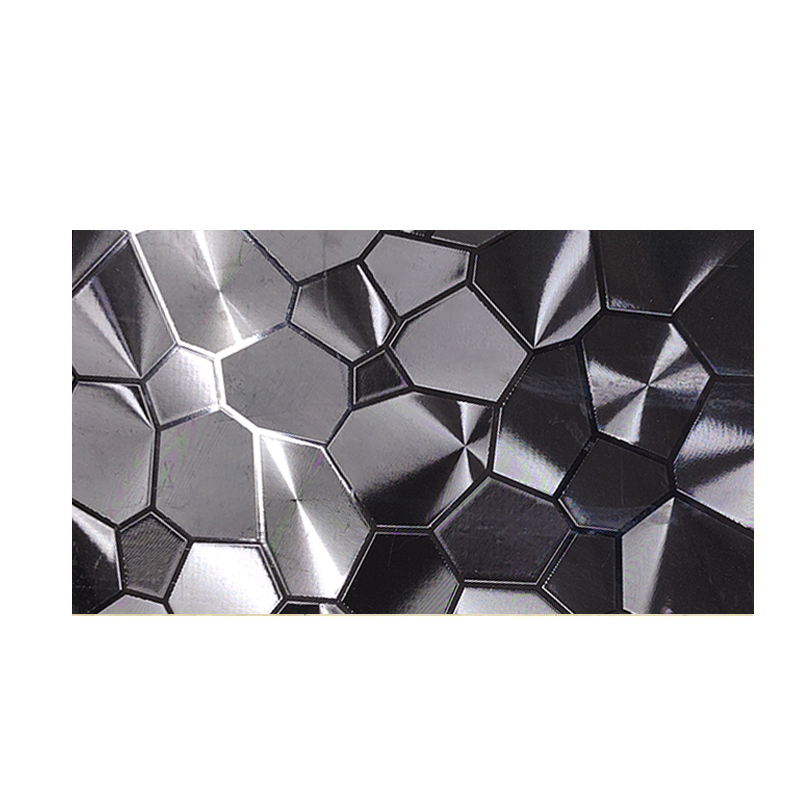 Synthetic Wall Planks - Fade-Proof & Low-Maintenance Interior Cladding Wood PlasHaining Yunxi New Material Technology Co., Ltd Offer Synthetic Wall Planks - Fade-Proof & Low-Maintenance Interior Cladding Wood Plastic ...View Product →
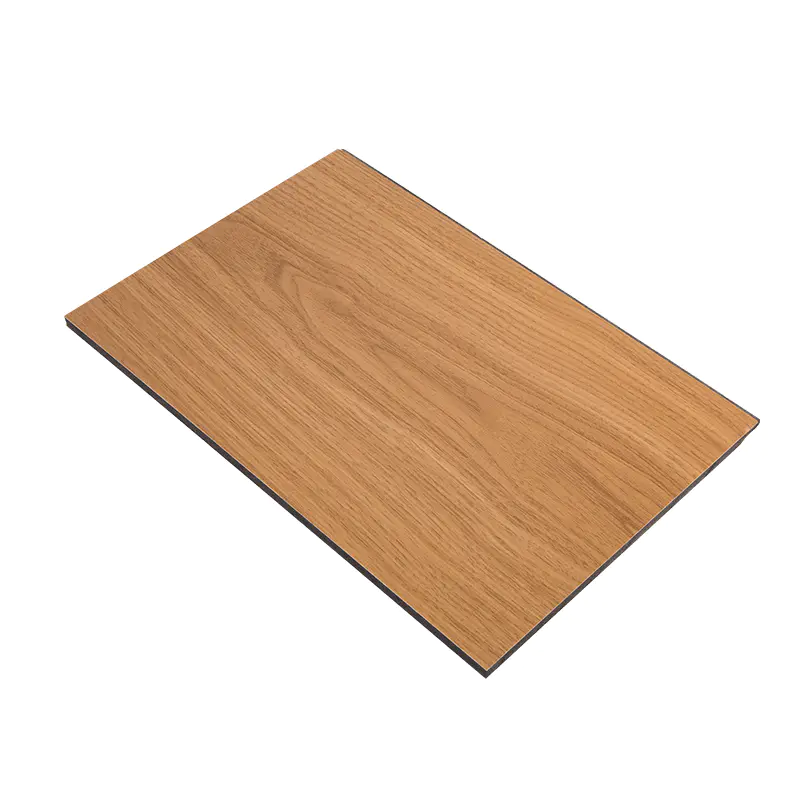 Co-Extrusion Outdoor Composite WPC Panel YXWPC1225-T Manufacturers, FactoryHaining Yunxi New Material Technology Co., Ltd Offer Co-Extrusion Outdoor Composite WPC Panel YXWPC1225-T, We Are China Co-Extrusion Outd...View Product →
Before you commit to a container order, check three things. First, confirm the weight per linear meter and the exact void geometry for hollow profiles. Second, request UV and moisture test data for the outer cap. Third, ask for a sample and measure the board thickness at several points along the length. You can also review the waterproof outdoor WPC board guide for durability criteria, or browse the full WPC product range to see how different composite formats are built.
Quick check: place a hollow and a solid sample on two blocks 400 mm apart, then press in the middle. The flex difference will tell you more than any brochure.
Frequently Asked Questions
These answers apply to standard WPC decking profiles made by established suppliers. Always confirm the specific load and span ratings with your manufacturer.
Is hollow WPC decking strong enough for residential use?
Yes, for most residential decks with proper joist spacing of 300–400 mm and normal foot traffic, hollow WPC decking performs adequately. It is not recommended for commercial vehicle access or very high point loads.
How long does solid WPC decking last?
With co-extrusion and a quality UV-resistant cap, solid WPC decking typically lasts 20–25 years in residential settings and 10–15 years under heavier commercial use.
Does hollow WPC decking save money?
Hollow profiles are cheaper per square meter, but the cost gap narrows when you add extra joists and blocking required for proper support. In some projects, the substructure savings with solid boards offset the higher board price.
Can I mix hollow and solid WPC decking in one project?
Mixing is possible if the profiles are the same width and the substructure is designed for the weaker hollow section. Maintaining a uniform elevation can be difficult because solid boards are denser and slightly heavier per meter.