+86-18367343973

 English
 Español
 عربى
عربى
Article Directory
- 1 Raw material composition sets the ceiling for decking quality
- 2 Hollow profile geometry determines real load capacity
- 3 The coextrusion shell is the most visible quality differentiator
- 4 Dimensional consistency proves the production line
- 5 Surface finish, slip resistance, and long-term appearance
- 6 How to verify hollow WPC decking quality before ordering
- 7 Installation preserves the quality the board was built with
Two hollow WPC decking boards can look almost identical in a showroom. A year later, one still holds its color, stays flat across the joists, and resists scratches from patio furniture. The other fades at the ends, bows slightly along its length, and absorbs water at every cut edge. The difference was decided long before installation, in the material recipe and on the extrusion line.
The quality of hollow WPC decking is not a matter of marketing claims. It can be traced to five measurable factors: the composition of the composite core, the geometry of the hollow profile, the protective coextrusion shell, dimensional consistency during production, and the finish of the walking surface. Buyers who check these factors get a deck that performs for years; buyers who skip them often pay twice.
Raw material composition sets the ceiling for decking quality
Hollow WPC decking is a wood-plastic composite made from wood fiber, a thermoplastic resin such as HDPE or PP, and a package of additives. Each component has a specific job, and the quality of the board depends on how consistently these components are selected and combined.
The resin system sets the mechanical base
The resin is the continuous phase that holds the composite together. Boards made from a consistent, contaminant-controlled resin batch resist impact, hold fasteners, and behave predictably during extrusion. Recycled resin lowers the price, but mixed melt flow rates and unknown contaminants make the board brittle and difficult to process uniformly.
Fiber, coupling, and the additive package control moisture behavior
Wood fiber gives WPC its rigidity and its natural look, but it also brings moisture into the composite. The coupling agent, typically a maleic-anhydride-modified polyolefin, bonds the fiber to the polymer matrix. Without sufficient coupling, water migrates along the fiber, the core swells, and the protective shell can delaminate after repeated wet-dry cycles. On a well-made hollow decking board, the 24-hour water absorption stays low, and the board returns close to its original dimensions after drying.
A complete additive package matters just as much. UV absorbers and light stabilizers protect the color, antioxidants keep the polymer stable at high surface temperatures, and mold inhibitors reduce bio-staining in humid climates. These ingredients are invisible when the board is new, and they determine what the deck looks like in its fifth year. The same logic applies to other outdoor composite products, as we explain in our guide to waterproof wood plastic composite board for outdoor use.
At the production level, consistent compounding is the foundation. A factory that controls pellet quality, fiber drying, and additive dosing across its WPC range, including its wood plastic board line, brings the same discipline to decking profiles.
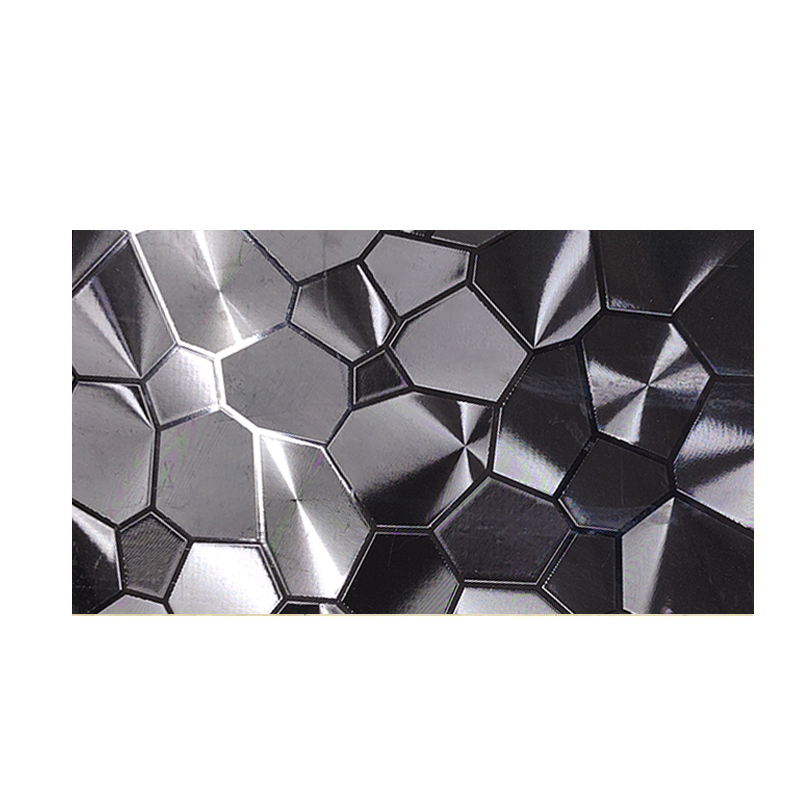 Synthetic Wall Planks - Fade-Proof & Low-Maintenance Interior Cladding Wood PlasHaining Yunxi New Material Technology Co., Ltd Offer Synthetic Wall Planks - Fade-Proof & Low-Maintenance Interior Cladding Wood Plastic ...View Product →
| Parameter | What high quality looks like | Signals to avoid |
|---|---|---|
| Resin type | Consistent HDPE or PP with controlled melt flow and stated recycled content | Mixed or unknown polymer sources, brittle cut ends, visible streaks |
| Wood fiber | Screened wood flour with a uniform particle size, dried before compounding | Coarse fibers, visible clumps, uneven color in the core |
| Coupling agent | Adequate maleic-anhydride coupling chemistry for strong fiber-polymer bonding | Fiber pull-out on the cross-section, swelling at cut ends after soaking |
| Additive package | UV absorbers, antioxidants, mold inhibitors, and light-fast pigments | No UV data provided, pigment dust on the surface, rapid fading in light tests |
| Water absorption | Low 24-hour absorption with stable re-drying dimensions | Visible weight gain, edge swelling, film lifting after wet-dry cycles |
Hollow profile geometry determines real load capacity
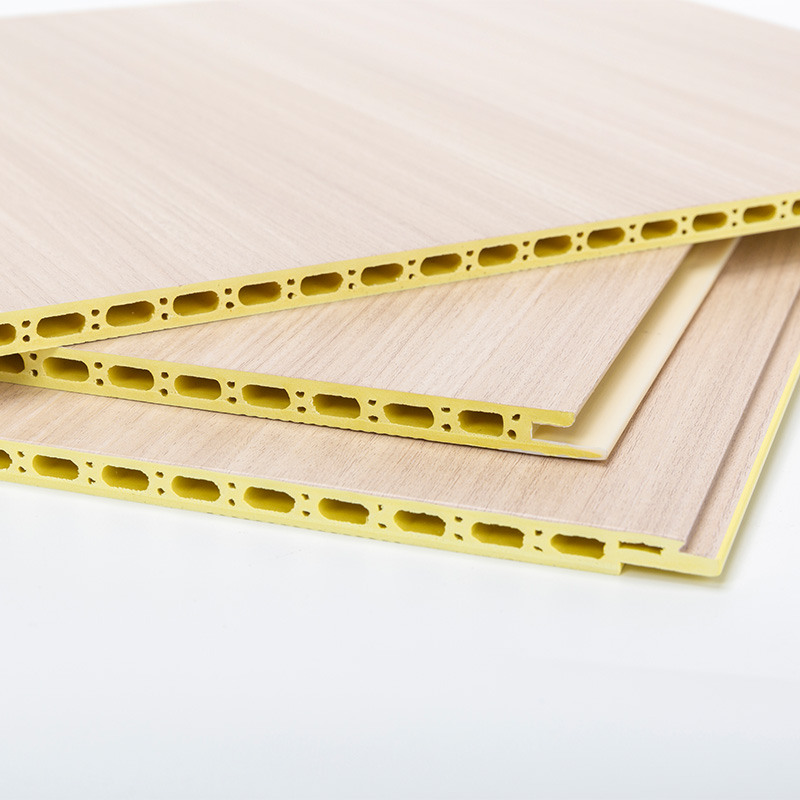
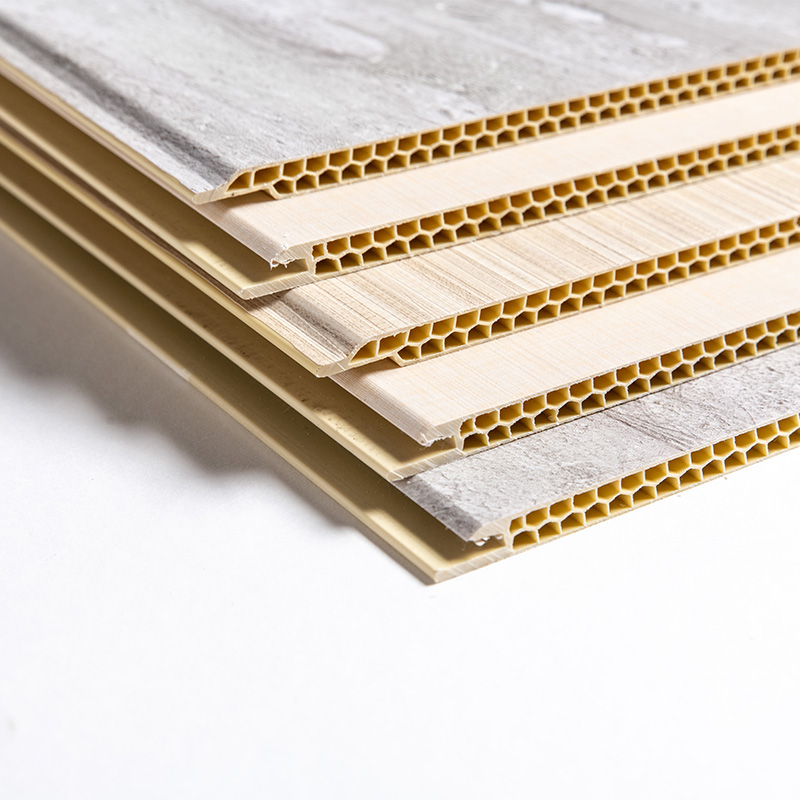
Hollow decking exists for a practical reason: it reduces material weight and cost while keeping enough stiffness for residential use. The engineering is in the walls and internal ribs. Two boards with the same outer dimensions can perform very differently depending on wall thickness, rib arrangement, and chamber shape.
A well-designed profile distributes the ribs to carry the load path and holds a minimum wall thickness that does not taper near the edges. Thin or uneven walls create weak points under deck chairs, planters, and concentrated foot traffic. The profile also affects straightness: a balanced hollow chamber cools evenly after extrusion, which keeps the board flat across temperature changes.
Ask what joist spacing the board is rated for. A quality hollow decking board, typically 21 to 25 mm thick, keeps deflection within acceptable limits on standard spacings such as 300 or 400 mm centers, while a weaker profile requires tighter joists to feel safe. Fastener retention matters too. Screws need to bite into solid walls of adequate thickness, and a thin chamber can crack when a screw is driven close to the edge. Slice a sample and measure the wall thickness with a caliper; the number should match the specification sheet.
The coextrusion shell is the most visible quality differentiator
On budget WPC decking, the pigment and UV protection are distributed through the whole core. The boards look fine when new, but the color near the surface degrades first, leaving a gray, chalky deck. Coextrusion builds a separate protective shell around the core in a single extrusion pass. The shell concentrates UV stabilizer and color where the sun can reach them, while the core remains structurally simple and cost-efficient.
The quality of a coextruded shell is judged by its thickness, its adhesion to the core, and the quality of its pigment. A generous shell survives foot traffic and sanding without exposing the core; strong adhesion prevents lifting at edges and cut profiles; light-fast pigments stop the board from shifting color after intense sun exposure. Because the shell and core are formed in one process, there is no glue line to fail. The technology behind this is explained in our article on coextrusion outdoor composite WPC panels, and the same production discipline is applied to our WPC coextrusion panel for outdoor cladding.
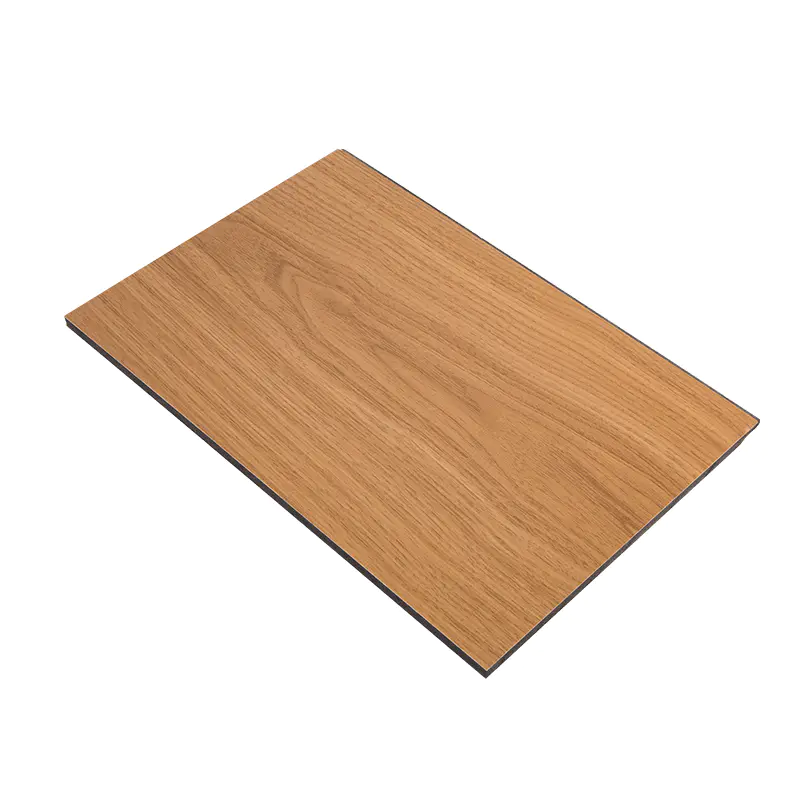 Co-Extrusion Outdoor Composite WPC Panel YXWPC1225-T Manufacturers, FactoryHaining Yunxi New Material Technology Co., Ltd Offer Co-Extrusion Outdoor Composite WPC Panel YXWPC1225-T, We Are China Co-Extrusion Outd...View Product →
Dimensional consistency proves the production line
Density and moisture control
The best recipe fails if the extrusion process is unstable. Hollow profiles are demanding because the melt must fill every thin rib evenly. Inconsistent feed or cooling creates voids, hairline cracks, and density variation along the length of the board. A quality board comes off the line with uniform density, a clean cross-section, and low enough moisture content to stay dimensionally stable.
Straightness and tolerance
A high-quality hollow decking board is straight, flat, and within a tight width tolerance over its full length. Twisting and bowing are usually the result of uneven cooling or premature calibration. The check is simple: place a long board on a flat surface and measure the gap under all four corners. Dimensional consistency is also what makes long boards line up cleanly during installation. At Haining Yunxi New Material Technology, the same compounding and calibration discipline runs across our WPC board range, so dimensional control is part of the routine we apply to composite profiles.
Surface finish, slip resistance, and long-term appearance
The surface is the part buyers can judge by touch. High-grade hollow decking uses deep embossing that imitates natural wood texture, with realistic grain depth rather than a flat printed pattern. The grain should feel consistent and sit inside the shell layer so it does not wear off. A dense shell also keeps dirt from packing into the grain, which makes cleaning much easier.
Slip resistance matters for a walking surface. Look for a deck that holds grip when wet; many quality products are rated to slip classes such as R10 or R11, and the manufacturer should be able to state the tested value. Texture is easy to create at first, but the long-term value lies in the shell retaining both texture and color. Routine care protects the surface, and the general principles for looking after composite boards are covered in our care guide on how to maintain and clean WPC siding.
How to verify hollow WPC decking quality before ordering
Instead of trusting a brochure, check the physical board. A short verification routine answers most quality questions:
- Cut or ask for a cross-section sample and measure wall thickness, rib count, and chamber shape against the specification sheet.
- Weigh a full-length board and calculate its density; a significant deviation from the stated value indicates unstable compounding.
- Soak a cut piece in water for 24 hours, then measure thickness change and weight gain.
- Run a coin or screwdriver tip across the surface; the shell should resist scratching without exposing the core.
- Check color coverage at the cut ends, where the coextrusion shell should wrap the core visibly.
- Place a long board on a flat bench to confirm straightness and twist before installation.
Ask the supplier to specify the test method behind each claim, whether it is deflection under load, UV color change, or freeze-thaw resistance. A manufacturer that controls compounding, extrusion, and testing in-house can answer these questions directly; a trading agent often cannot.
Installation preserves the quality the board was built with
Quality continues after delivery. Hollow decking needs the right joist spacing, airflow beneath the deck to release moisture, and expansion gaps at the ends in warm weather. Cut ends should be capped or sealed, and fasteners must be set at the recommended distance from board edges. A well-made hollow profile tolerates normal outdoor conditions, but it cannot compensate for a frame that moves or a layout without drainage.
High-quality hollow WPC decking is not a single magic ingredient. It is a controlled material recipe, a profile engineered for real loads, a coextrusion shell that protects the surface, consistent production, and an honest finish. Buyers who verify these factors before ordering get a deck that looks good on day one and stays stable season after season. That is the only definition of quality that matters.