+86-18367343973

 English
 Español
 عربى
عربى
Article Directory
- 1 What a WPC Production Line Actually Makes
- 2 Raw Materials and Their Roles
- 3 Compounding — Where Most Hidden Defects Begin
- 4 Extrusion — Where the Board Takes Its Shape
- 5 Co-Extrusion — Adding a Protective Cap Layer
- 6 Cooling, Sizing, and Conditioning
- 7 Surface Finishing — Turning a Plain Board into a Wood Look
- 8 Quality Checks That Predict Field Performance
- 9 What the Production Process Means for Product Selection
What a WPC Production Line Actually Makes
Two wall panels with similar wood-grain prints can behave completely differently on a job site. One stays flat, cuts cleanly, and holds screws; the other warps after installation and crumbles at the edges. The difference is almost always decided on the production line, before the product reaches a warehouse.
Wood plastic composite (WPC) is produced by combining wood fiber or flour with a thermoplastic resin and pushing that mixture through a controlled heating, shaping, and cooling process. The result is not lumber and not pure plastic; it is an engineered composite whose final performance depends on how precisely each production step is executed. Understanding how WPC materials are produced helps buyers compare suppliers, specify products with confidence, and avoid common defects such as internal voids, warpage, and inconsistent color that trace back to shortcuts in mixing, moisture control, and cooling.
WPC has become a mainstream building material because it can use recycled wood waste and plastic while delivering boards that look like timber but resist moisture better. The broader reasons why builders choose WPC board over traditional materials are covered in our separate overview of this material class.
Raw Materials and Their Roles
The formulation of WPC starts with two main ingredients — wood and plastic — plus a smaller group of additives that control color, stability, and how easily the mixture flows through an extruder.
- Wood fiber or wood flour. Sawdust, bamboo fiber, rice husks, and other cellulosic material are common sources. The fiber is dried to a residual moisture content below 1 to 2 percent, because leftover water turns to steam inside the hot extruder and creates bubbles and weak points in the board.
- Thermoplastic resin. Recycled polyethylene (PE), polypropylene (PP), and polyvinyl chloride (PVC) are the most common matrices. The resin type fixes the processing temperature and determines stiffness, fire performance, and where the finished board can be used.
- Coupling agents. These molecules have a polymer-compatible end and a wood-compatible end. They chemically bridge the hydrophilic wood fiber and hydrophobic plastic, preventing separation along the interface. A WPC formulation without an adequate coupling agent behaves like unreinforced filler rather than a structural composite.
- Additives. UV stabilizers, pigments, internal lubricants, and fungicides are added in small percentages. Foaming agents are included when producing lightweight cellular WPC panels.
| Thermoplastic resin | Typical processing temperature | Key characteristics | Common WPC applications |
|---|---|---|---|
| PE (polyethylene) | 160–200 °C | Tough, flexible, excellent moisture resistance, lower stiffness | Outdoor decking, fencing, outdoor boards |
| PP (polypropylene) | 180–220 °C | Higher stiffness, better heat deflection, more impact sensitivity in cold | Outdoor rails, load-bearing profiles |
| PVC (polyvinyl chloride) | 170–195 °C | Smooth surface, inherent flame retardance, strong color retention | Interior wall panels, decorative profiles, fluted panels |
Compounding — Where Most Hidden Defects Begin
Once the raw materials are selected, the plant must convert them into a uniform, extrudable compound. This is the stage where many of the most common WPC defects are born.
Drying and proportioning
Wood fiber is hygroscopic, so it arrives at the factory carrying significant moisture. Most production plants dry it in a flash dryer or rotary drum dryer and then dose exact proportions of fiber, resin, coupling agents, and additives by weight. The typical wood content in a WPC formulation ranges from about 50 to 65 percent, with interior wall panels often on the higher side for a natural matte appearance, and outdoor decking formulations tuned to balance strength, stiffness, and cost.
High-speed mixing and pelletizing
The dry blend is charged into a high-speed mixer, where frictional heat uniformly distributes the additives. In many plants, the mixture is then melt-compounded in a twin-screw extruder and cut into pellets; in others, the dry blend feeds directly into the profile-extrusion line. Moisture monitoring continues throughout this phase because even one wet batch can produce an entire run of blister-prone, low-density boards.
Extrusion — Where the Board Takes Its Shape
Solid WPC boards, hollow decking, fluted panels, and grille profiles are all shaped by hot-melt extrusion.
- The compound is fed into a single-screw or twin-screw extruder whose barrel heating zones progressively melt the mixture.
- Typical melt temperatures are in the 160–200 °C range, depending on the resin system. Exceeding the window can burn the wood particles and release gas; running too low produces a rough surface and weak inter-particle bonding.
- The molten composite is pushed through a heated die whose opening defines the full cross-section of the profile: solid board, hollow cellular core, flute geometry, or tongue-and-groove edges.
- Immediately after the die, the profile enters a vacuum calibration unit and water-cooling troughs that lock in the external dimensions.
Solid versus foamed WPC
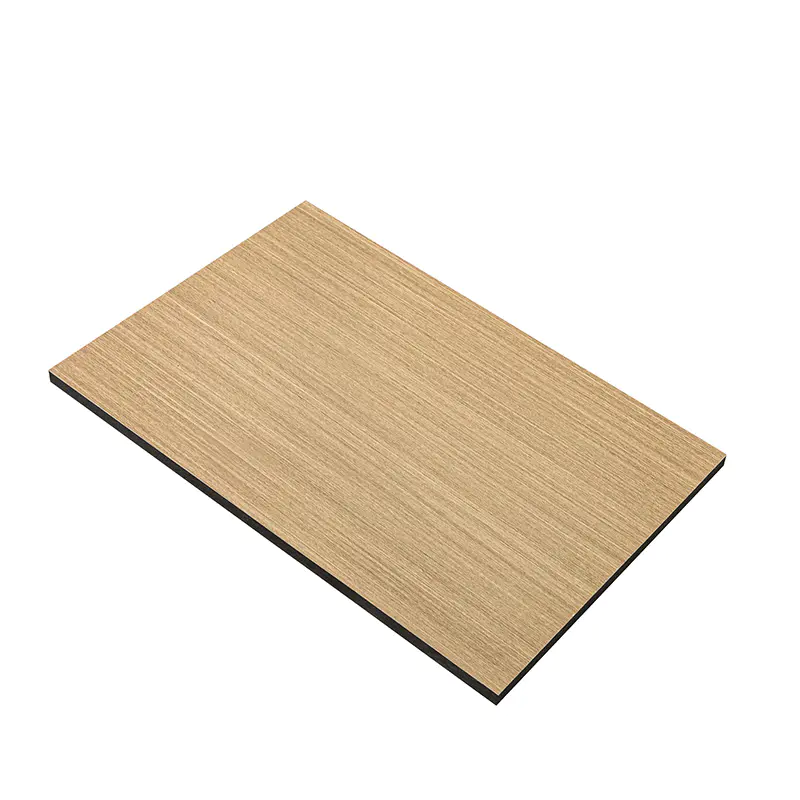
For buyers, the extrusion stage explains the difference between solid and foamed WPC. Foamed boards are produced with a chemical blowing agent that creates a uniform cellular core; they are lighter, easier to cut, and more insulating, which is why many indoor WPC wall panels use a foamed core. Solid WPC, by contrast, is denser and carries higher screw-holding strength, which suits decking and structural uses. Solid wood-plastic boards from integrated production lines are a typical example of this heavier category.
Co-Extrusion — Adding a Protective Cap Layer
A conventional WPC surface, especially one with high wood content, will fade and attract dirt in exterior exposure. Co-extrusion solves this by feeding a second, wood-free polymer layer through the same die. The cap layer usually contains concentrated UV absorbers, colorants, and impact modifiers, and it fuses to the substrate while both layers are still molten.
Co-extruded boards provide three measurable benefits: longer color retention under direct sunlight, a smoother surface that is easier to clean, and better resistance to surface cracking after weathering. This is why co-extrusion has become the default process for outdoor composite panels that must hold a consistent appearance for years. We explain how co-extrusion technology creates high-performance outdoor WPC panels in more detail in a separate article.
WPC co-extrusion panels sold for outdoor cladding and decking use this exact structure, with a protective cap fused over the wood-plastic substrate.
Cooling, Sizing, and Conditioning
After extrusion, the board is still hot and soft. Precise downstream handling decides whether it ends up flat or bowed.
The calibration unit sets the profile's cross-section while the material is still warm enough to deform. Water-cooling troughs then remove heat gradually; if the board cools asymmetrically, internal stresses lock in and show up later as bowing, twisting, or cupping.
Aging and cutting
The production line cuts lengths with a flying saw or automatic cutter, then stacks boards for conditioning. Most established plants hold WPC for at least 24 to 48 hours before packing so internal stresses can relax and the board dimensions stabilize. Boards that are packed immediately after cooling carry a well-known failure risk: they arrive at the job site visibly warped even though factory QC passed them.
Surface Finishing — Turning a Plain Board into a Wood Look
Freshly calibrated WPC leaves the line as a uniform, usually light-brown plank. The wood-grain look is created by finishing steps.
- Calendered film lamination applies a printed decorative layer in the same line, which is common for indoor WPC and PVC wall panels.
- Embossing rolls press a tactile grain into the surface, matched to the printed pattern.
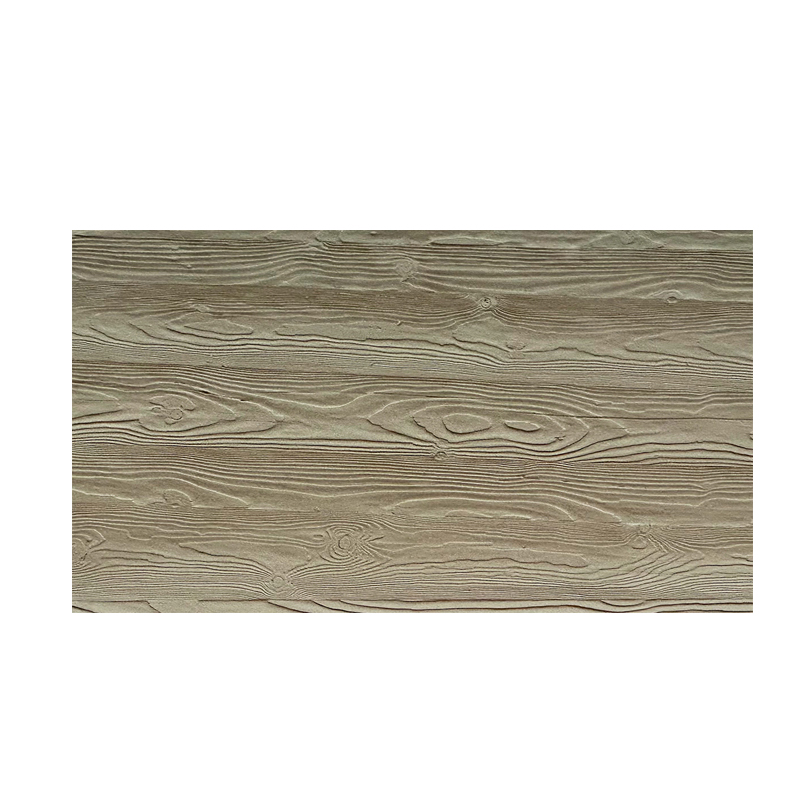
- Brushing or light sanding exposes subtle texture on solid WPC boards.
- Edge sealing or waxing closes exposed wood fibers at cut ends.
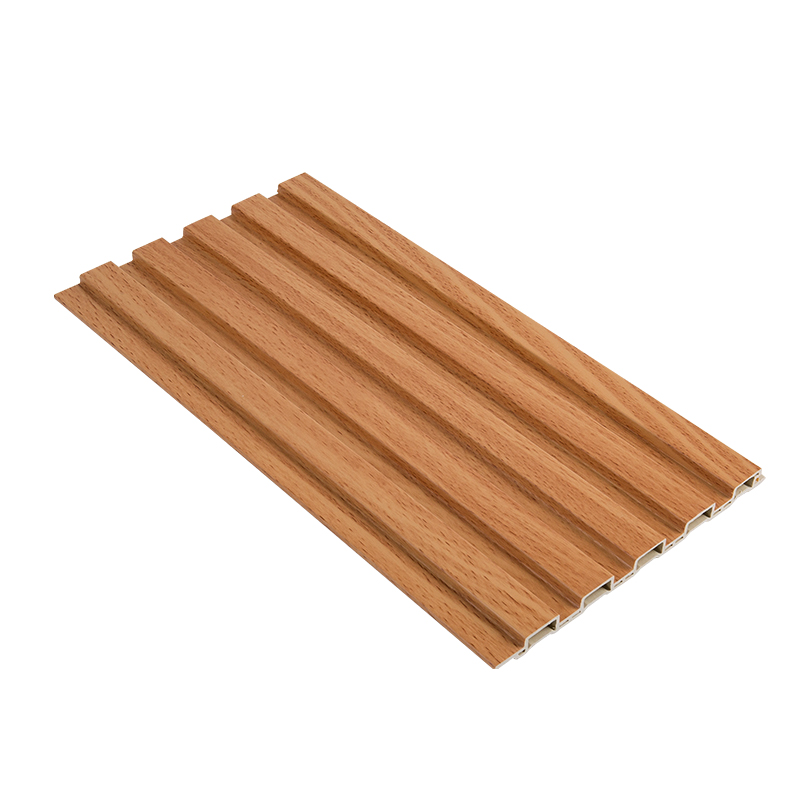
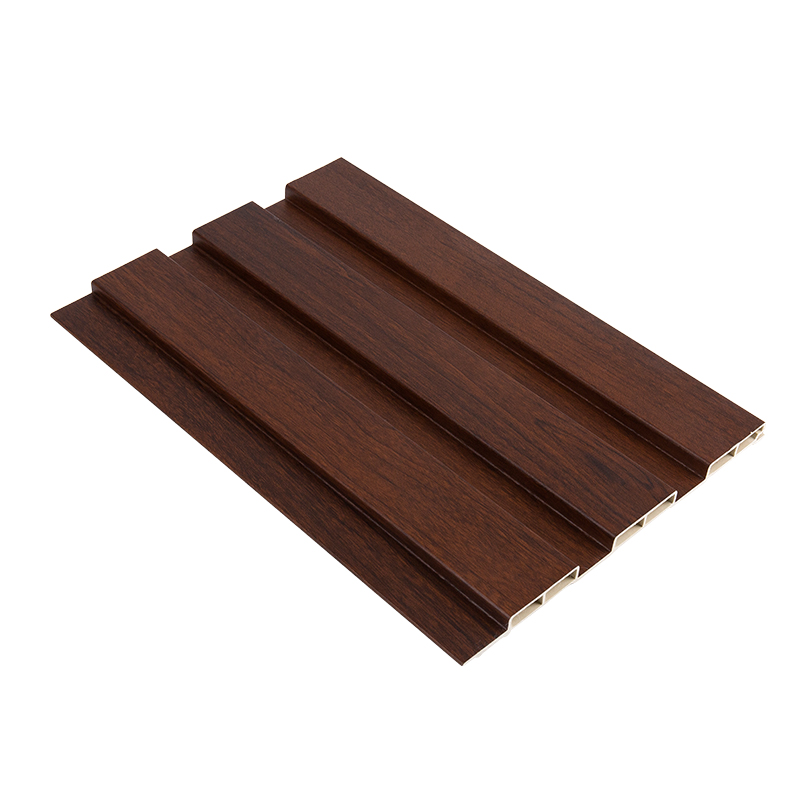
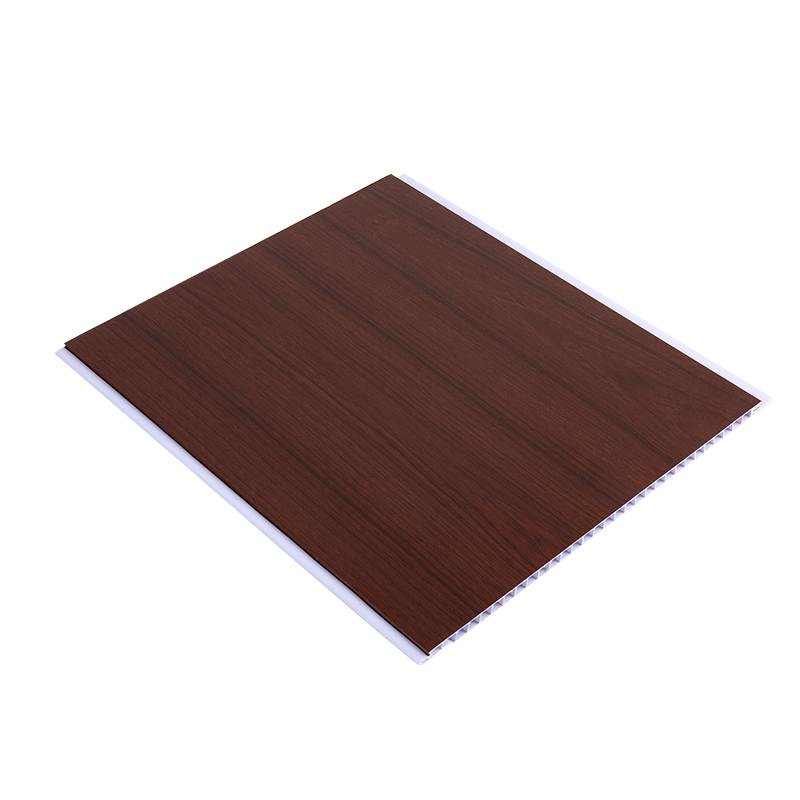
Finishing quality depends on precise tension and temperature control. If the printed film advances unevenly, the grain pattern loses registration with the emboss and the board looks obviously artificial. Indoor WPC wall panels are a representative example of film-finished, foamed-core products made for fast interior renovation.
Quality Checks That Predict Field Performance
Manufacturers rarely publish their process data, but buyers can ask the right questions about production control. The checks below correlate directly with long-term behavior.
| Production check | Why it matters | What happens if it is skipped |
|---|---|---|
| Compound moisture content | Prevents voids and weak zones | Internal bubbles, brittle edges, surface blisters |
| Density or weight per meter | Confirms the foam structure and dosage accuracy | Irregular strength, panels that break during installation |
| Cross-section dimensions | Confirms die accuracy and calibration control | Loose joints, uneven flutes, profiles that do not align |
| Warpage after 24–48 h aging | Confirms cooling and conditioning stability | Boards bow after installation, gaps between panels |
| Cap layer thickness (co-extrusion) | Guarantees UV and weathering protection | Early fading, surface chalking, cracking |
| Formaldehyde and VOC emission | Verifies low-emission claims | Indoor air quality problems in sealed spaces |
What the Production Process Means for Product Selection
Once you connect the process steps to the products, specification becomes straightforward.
- Interior wall panels are usually PVC-matrix, foamed WPC with a printed film finish: light, low-emission, and quick to install.
- Outdoor decking and cladding use PE or PP matrices, often co-extruded, with UV-stable cap layers.
- Fluted panels and grilles are extruded profiles where calibrator precision determines the consistency of the flute walls.
- Formwork and heavy-duty boards are dense, solid WPC engineered for high screw retention and reuse.
When evaluating a supplier, ask four process-related questions: which resin matrix is used, is the board foamed or solid, is it co-extruded, and how is the wood-grain finish applied? Honest answers to those questions predict product behavior better than a brochure photograph.
A manufacturer with an integrated production flow — from compounding to finishing — is also better positioned to keep batches consistent in color, size, and density. That is the level of control necessary for products that are ordered in volume and compared panel by panel at the site. Our step-by-step WPC panel installation guide is a useful reference when you evaluate what substrate tolerance the product actually requires during installation.