+86-18367343973
 English
 Español
 عربى
Article Directory
Two decks installed in the same month, on the same street, in the same price bracket. Two years later, one still shows the warm wood-brown color the owner picked, and the other has faded to a patchy gray with a chalky film that smears on any hand that touches it. The difference was not the color sample or the installation crew. It was the ultraviolet resistance engineered into the boards.
If you are buying WPC decking for an open terrace, balcony, or pool surround, UV resistance is not a detail to skim past. It is the factor that determines how the deck looks, feels, and performs after the first full summer of sun.
What UV Radiation Does to WPC Decking
WPC decking is a composite of wood fiber and thermoplastic polymer, usually high-density polyethylene or polypropylene. The wood fiber delivers the natural appearance and stiffness; the polymer binds the material and provides moisture resistance. Neither component is naturally immune to sunlight. UV-B radiation, with wavelengths between roughly 280 and 315 nanometers, carries enough energy to break chemical bonds in the polymer matrix and in the lignin of the wood fiber.
When those bonds break, a chain of gradual failures begins:
- Color fading: organic pigments degrade faster than inorganic ones, and the board color shifts noticeably within months.
- Chalking: oxidized polymer forms a white powder on the surface; once it washes off, a lighter, rougher layer stays exposed.
- Micro-cracking: the damaged surface loses flexibility, and normal temperature cycling opens hairline cracks that trap dirt and admit moisture.
- Fiber exposure: in advanced cases, wood fiber pushes above the surface, giving the board a gray, fibrous texture that holds stains.
The surface is always the first casualty. Dimensional stability and load capacity usually survive longer because the core remains intact. But once the surface layer fails, the deck looks old, feels rough, and demands constant cleaning.
How Manufacturers Build UV Resistance Into WPC Decking
Durable UV resistance is built into the formulation, not sprayed on at the end of the production line. Three mechanisms do the heavy lifting.
UV absorbers, HALS, and stable pigments
UV absorbers capture the damaging radiation and release the energy as harmless heat before it can fracture the polymer chains. Hindered amine light stabilizers (HALS) neutralize the free radicals that form when UV reaches the material, stopping the degradation cycle from spreading. The pigment system matters just as much: inorganic pigments such as iron oxide and titanium dioxide resist sunlight far better than organic dyes, and higher pigment loading means longer-lasting color.
The co-extrusion cap layer
The most effective outer defense for outdoor decking is a co-extruded cap layer. During production, a second extruder fuses a dense skin, typically 0.3 to 0.8 millimeters thick, onto the WPC core. This skin is loaded with elevated concentrations of UV stabilizers and color pigments, because it is the only part of the board that has to face the sun. The core can then be optimized for strength and cost instead of for UV exposure.
A WPC co-extrusion panel built this way keeps the protective layer permanently bonded to the core, which is a clear advantage over a sprayed-on topcoat: a coating wears away over time, while a fused skin layer stays with the board for its full service life. Co-extrusion also improves scratch resistance and moisture exclusion. The production benefits of this method for outdoor composite panels are explained further in our guide to co-extrusion technology for high-performance outdoor composite WPC panels.
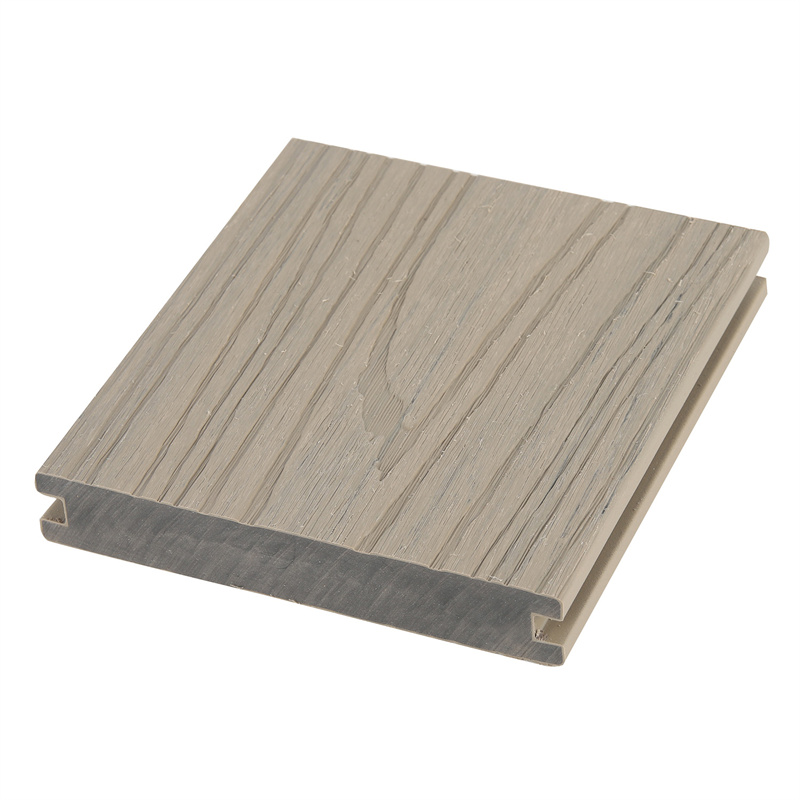
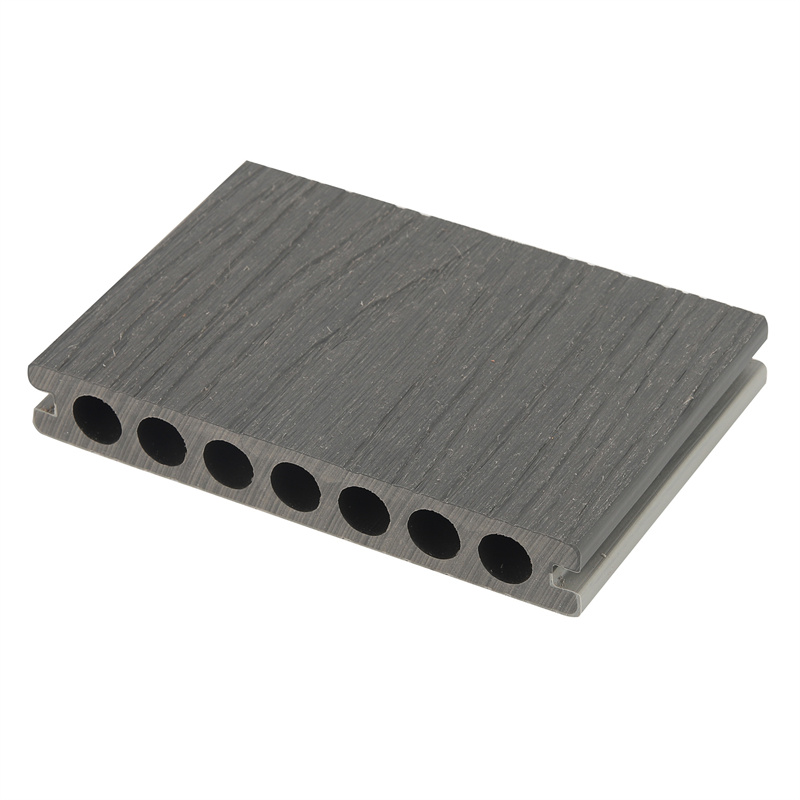
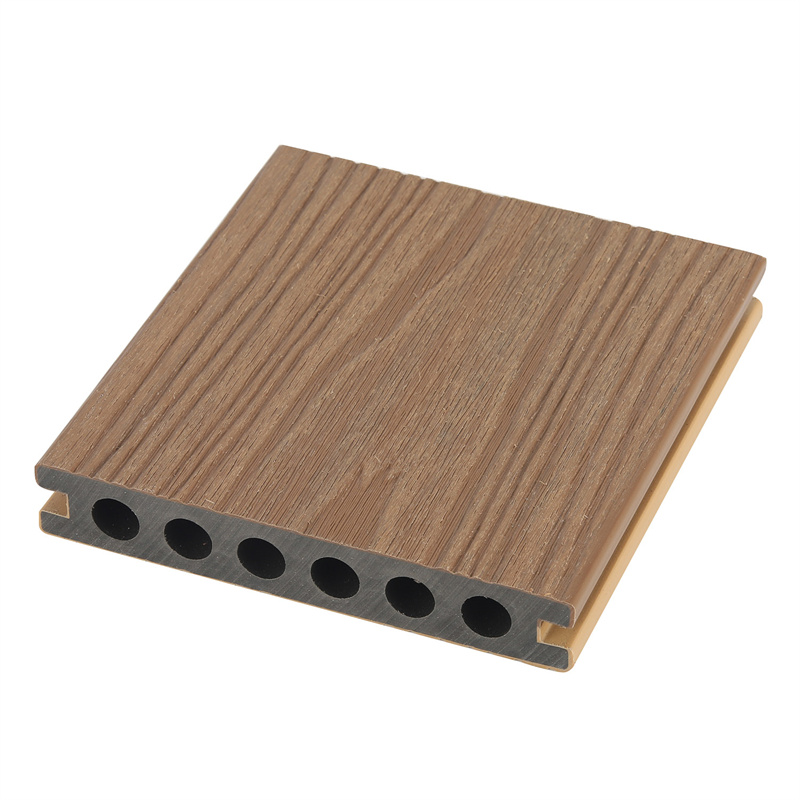
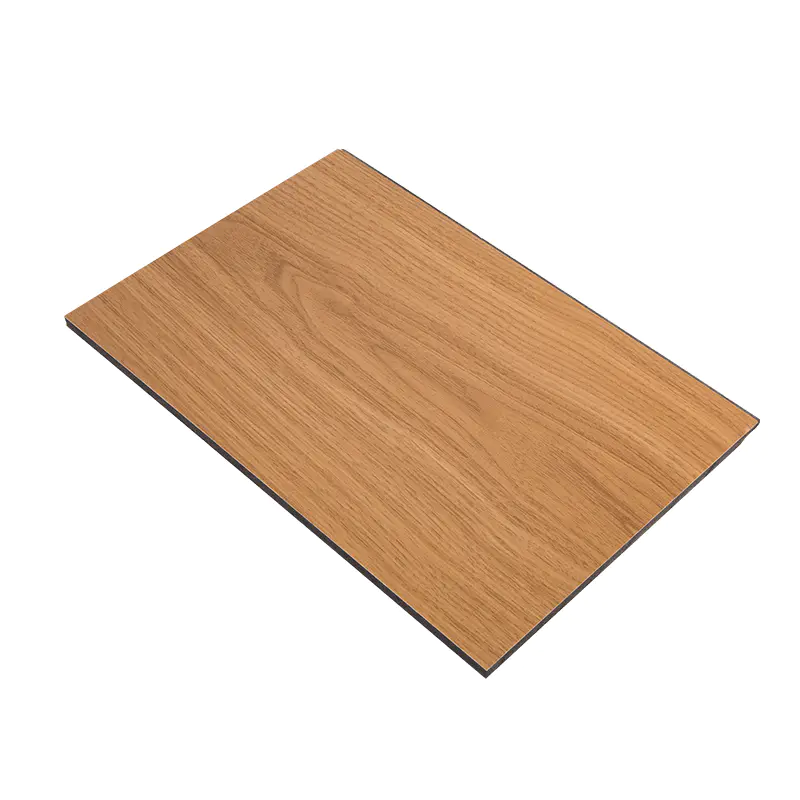 Co-Extrusion Outdoor Composite WPC Panel YXWPC1225-T Manufacturers, FactoryHaining Yunxi New Material Technology Co., Ltd Offer Co-Extrusion Outdoor Composite WPC Panel YXWPC1225-T, We Are China Co-Extrusion Outd...View Product →
Protecting the wood component
The wood fiber inside the composite also needs defense. Lignin, the natural polymer that binds wood cells, absorbs UV strongly and degrades into a gray, fibrous residue. Manufacturers counter this with compatibilizers and by keeping the outer layer dense, so oxygen and water cannot easily reach the wood fibers behind the surface.
Measurable Benefits of UV-Resistant WPC Decking
UV resistance improves three things deck owners actually notice: color retention, surface integrity, and lifecycle cost. The table below compares a standard WPC board and a UV-resistant co-extruded grade in typical outdoor service.
| Performance factor | Standard WPC | UV-resistant co-extruded WPC |
|---|---|---|
| Color change after two years outdoors | Clearly visible fading (delta E often above 6) | Minor shift (delta E typically 2–4) |
| Surface chalking | Common from month 6–12 | Rare before year 5 |
| Micro-cracking | Possible by year 2–3 | Unlikely in the first decade |
| Cleaning routine | 2–4 times per year plus stain treatment | 1–2 times per year with soap and water |
| Expected service life | 10–15 years | 20–25 years |
| Lifecycle cost per year | Higher due to earlier replacement | Lower over a full lifespan |
The delta E (ΔE) metric deserves attention because it is the international standard for measuring color difference. A ΔE below 2 is invisible to most eyes; 2 to 4 is a slight shift; above 6 is a change the owner notices from across the yard. When a supplier quotes a fade warranty, the ΔE limit after a set period is the number to ask about.
How to Verify UV Resistance Before Buying
A product page that says "good UV resistance" is not data. Before you place an order, ask for the following:
- Accelerated weathering test results, usually from a QUV chamber or xenon-arc equipment running ASTM G154 or ISO 4892-2. A report showing ΔE of 4 or less after 1000 to 2000 hours gives you a benchmark for comparing products.
- Cap layer specification. For a co-extruded board, ask for the cap thickness. Anything below 0.3 millimeters is a cost-cutting sign; a thicker layer with sound formulation offers more staying power.
- Fade warranty terms. A reliable manufacturer states a service life and a maximum ΔE in writing. A warranty without a number means little.
- Real-sun sample test. Leave a cut sample on a sunny roof for 60 to 90 days and inspect it for color shift and chalking. This test often reveals more than a datasheet.
Whether WPC panels age, fade, or deteriorate under long-term UV exposure is examined in more depth in our article on long-term UV exposure of WPC panels. For projects in damp climates, the material considerations in the guide to waterproof wood-plastic composite boards for outdoor use are equally relevant, since moisture and UV often attack the same surface.
Matching UV Performance to Your Project's Sun Exposure
High-UV regions and unshaded orientations
In the Middle East, Australia, the southwestern United States, or any high-altitude site, and for decks facing south or southwest in the Northern Hemisphere, a co-extruded grade should be specified from the start. Six or more hours of direct sun per day will visibly fade a standard WPC board within two summers.
Shaded decks and milder climates
Decks under a pergola, in a courtyard with afternoon shade, or in regions with low annual sunshine hours can perform well with a standard grade such as a wood-plastic board formulated for outdoor use. The color still shifts a little, but structural durability remains good and the upfront cost is noticeably lower than a co-extruded product.
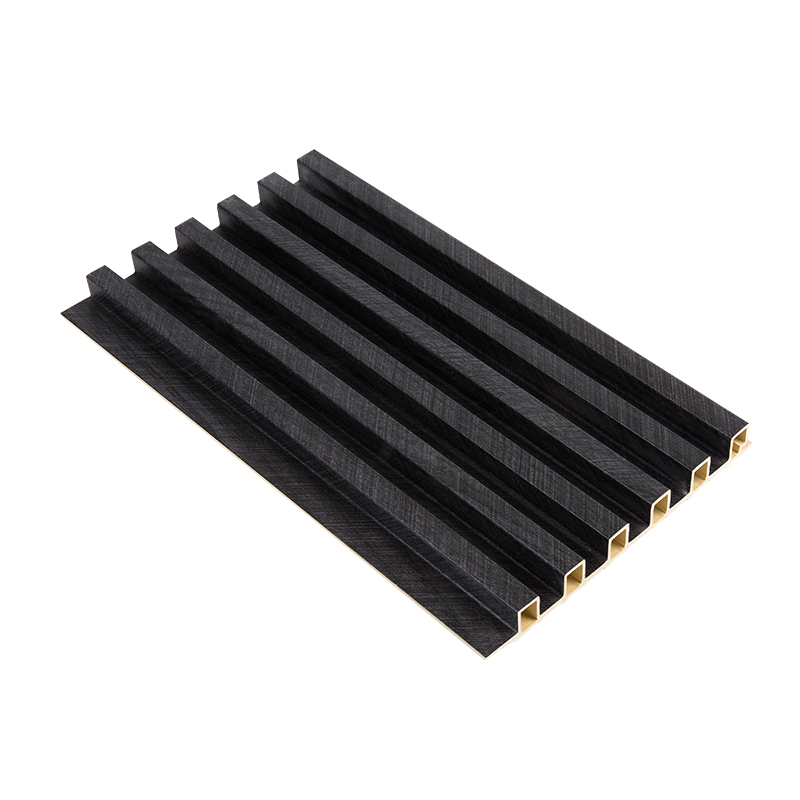
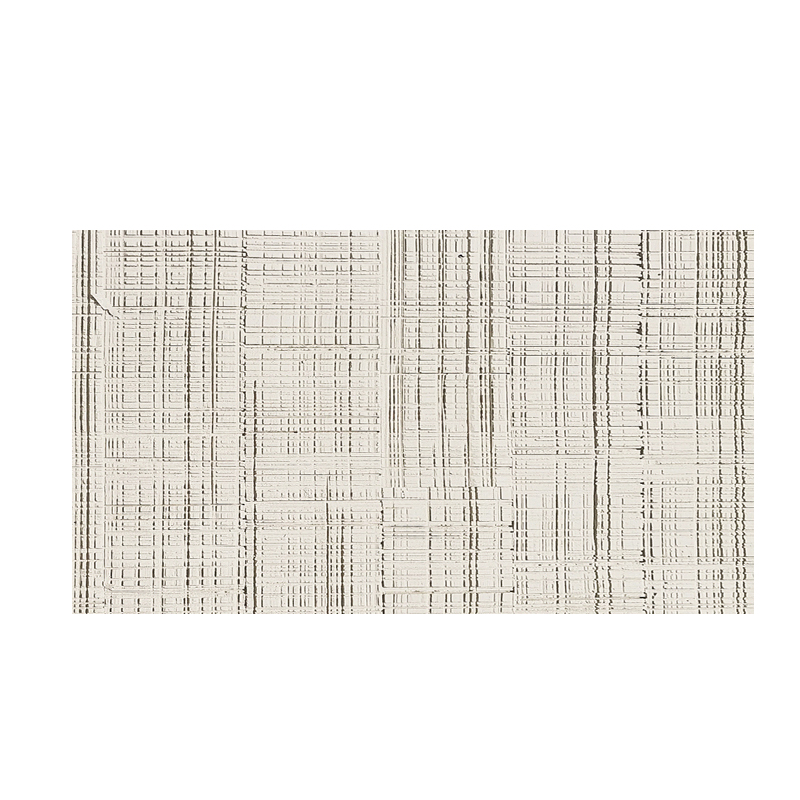
 Synthetic Wall Planks - Fade-Proof & Low-Maintenance Interior Cladding Wood PlasHaining Yunxi New Material Technology Co., Ltd Offer Synthetic Wall Planks - Fade-Proof & Low-Maintenance Interior Cladding Wood Plastic ...View Product →
Matching accessories and surrounding structures
UV resistance matters for every composite element that sits in the sun, including pergolas, cladding, and boundary fences. If the deck area needs a matching privacy screen or perimeter fence, the same co-extrusion logic applies to the composite fence board used for that purpose, so the whole outdoor space ages at the same pace.
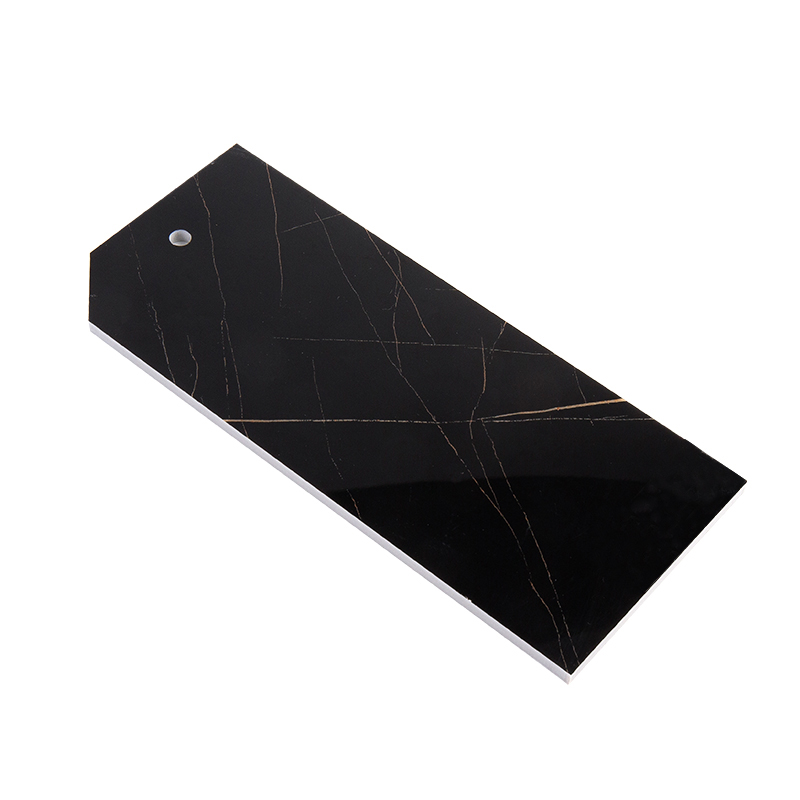
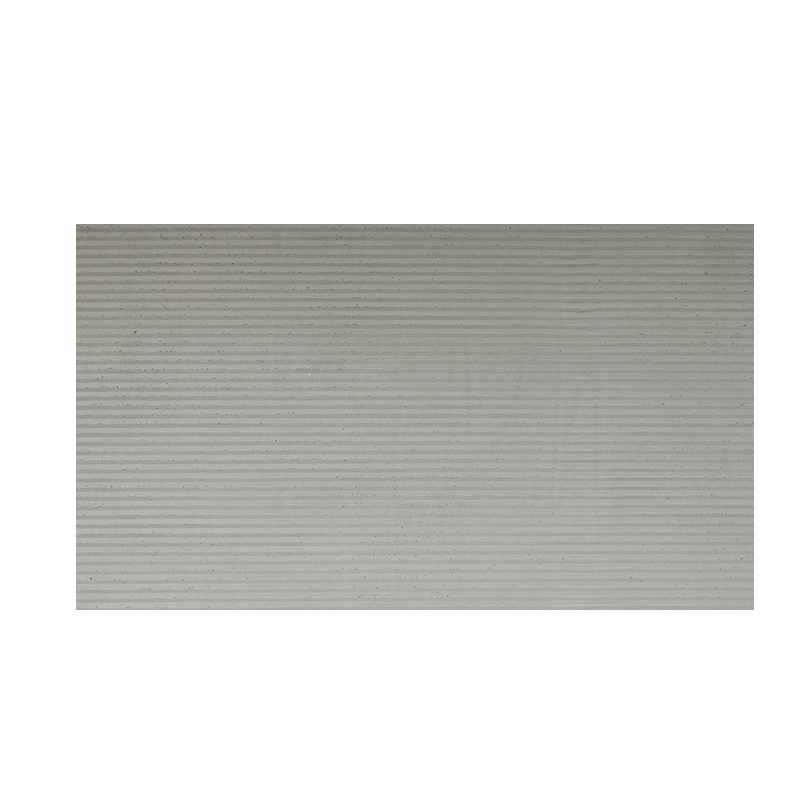
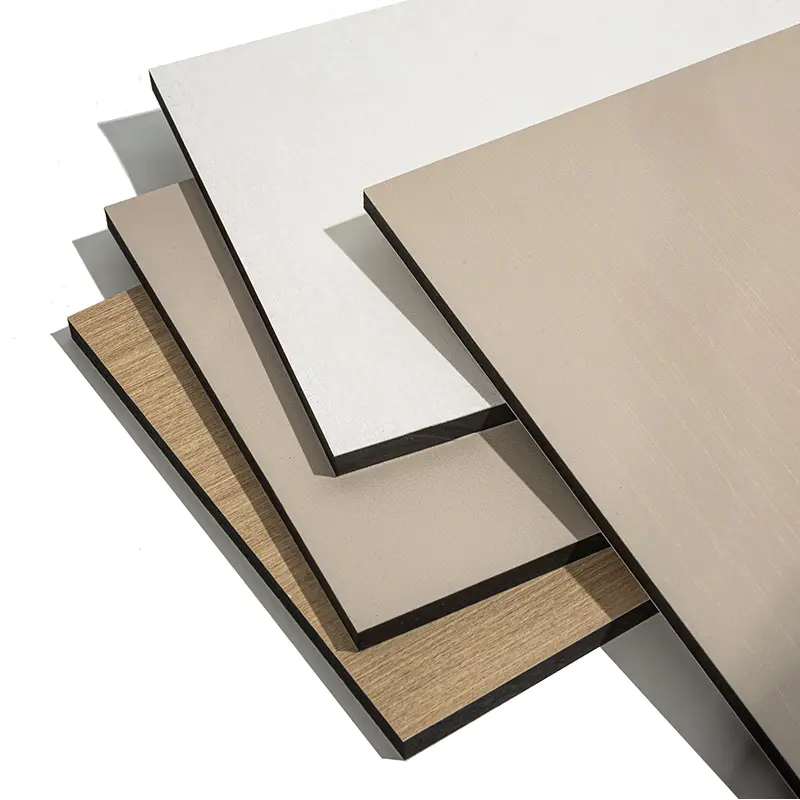 WPC Wall Panels - Moisture-Resistant & Lightweight Interior Cladding YXWPC1225-THaining Yunxi New Material Technology Co., Ltd Offer WPC Wall Panels - Moisture-Resistant & Lightweight Interior Cladding YXWPC1225-T, We...View Product →
Installation and Maintenance Considerations
Even the best UV formulation can be let down by poor installation or aggressive cleaning. Keep these points in mind:
- Respect the specified board gaps. Thermal movement is normal in WPC, and blocked expansion creates internal stress that shows up as surface cracks.
- Use the manufacturer's clip and screw system. An overtightened screw or a missed joist creates a stress concentration point where cracking begins.
- Clean twice a year with a soft brush and mild soap. Pressure washing with a narrow nozzle can erode the cap layer in a single pass.
- Move planters and furniture instead of dragging them. UV-resistant surfaces are more scratch-tolerant than standard WPC, but every scratch still opens a path for moisture and UV.
UV resistance separates a deck that still looks new after a decade from one that looks tired after one summer. It is achieved through stabilizer chemistry, pigment selection, and most effectively, a co-extruded cap layer that shields the structural core. When you compare quotes, compare the ΔE test data, cap layer specification, and warranty terms, not just the price per square meter. The extra investment in UV resistance is repaid through color, surface condition, and lifespan. For an outdoor deck, that is the performance that counts.