+86-18367343973

 English
 Español
 عربى
Article Directory
A renovation specifier choosing wall panels for a 96-room hotel must weigh bathrooms, corridors, guest-room feature walls, and a breakfast bar against one material budget. PVC and SPC wall panels look similar in a brochure: both carry wood-grain films, waterproof cores, and fast installation. Their physical cores, however, produce different results in wet rooms, high-traffic paths, and sun-exposed walls. Choosing by appearance alone is the most common reason for wavy panels and dented surfaces within the first service year.
Haining Yunxi New Material Technology Co., Ltd., a wall panel manufacturer producing both polyvinyl chloride and stone plastic composite panels in-house, builds both core types on the same production floor. That dual experience makes the practical comparison straightforward: match the core to the zone, not the finish to the trend.
Core definition
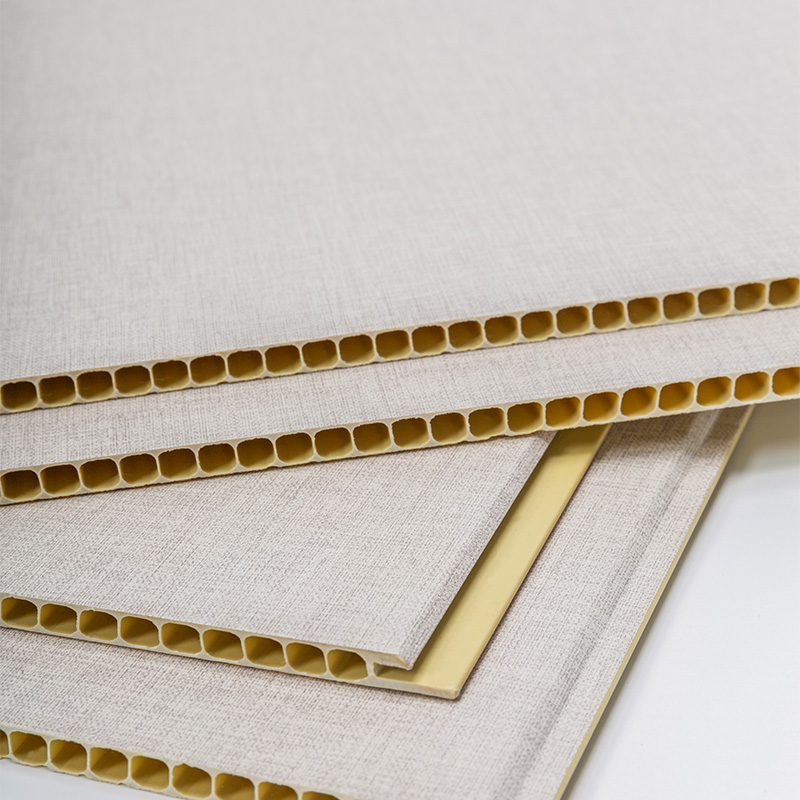
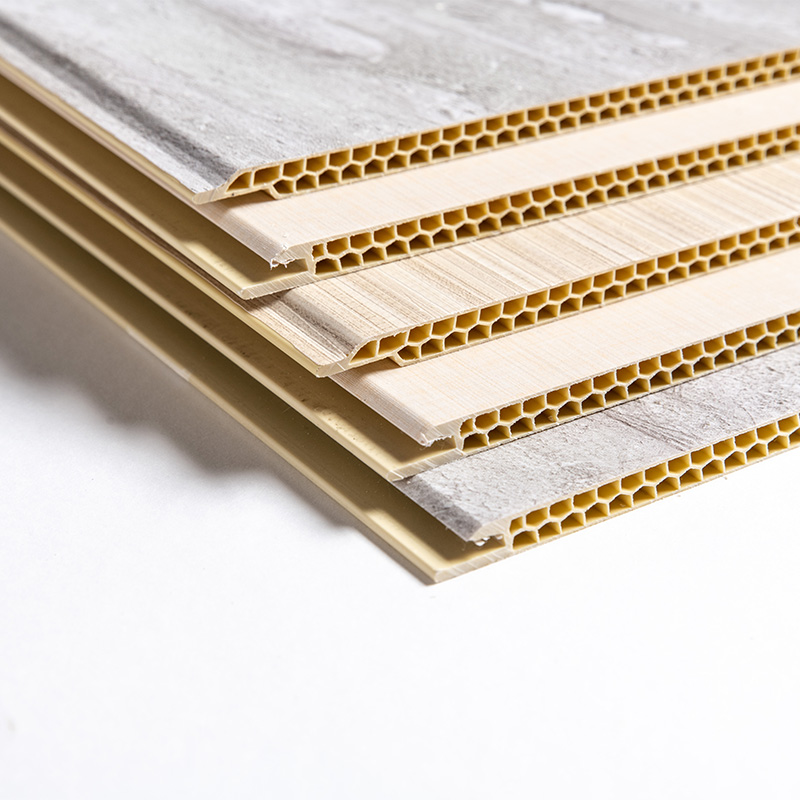
PVC wall panels use a foamed polyvinyl chloride core with a laminated decorative film. SPC wall panels, short for stone plastic composite, use a limestone-filled rigid core with a printed film and wear layer. The stone content, typically above 60 percent of the core weight, gives SPC its stiffness, flatness, and dimensional stability.
Core Structure: What Actually Differs Inside the Panel
At the specification level, the core layer determines nearly every measurable difference between PVC and SPC panels, from impact resistance to the maximum wall span a panel can bridge without visible deflection.
| Specification | PVC wall panel | SPC wall panel |
| Core material | Foamed polyvinyl chloride | Limestone-filled composite |
| Typical stone content | 0 percent | Above 60 percent of core weight |
| Common thickness | 6 to 10 mm | 4 to 8 mm, denser per millimeter |
| Weight | Light, easy to carry | Heavier, more rigid |
| Edge profile | Tongue-and-groove, shiplap | Tongue-and-groove, drop-lock |
| Impact resistance | Moderate, dents under point load | High, resists dents and scuffs |
| Thermal movement | Expands and contracts more | Low, dimensionally stable |
| Substrate tolerance | Conforms to minor unevenness | Needs a flatter substrate |
60%+Typical stone content in an SPC core
1.5xSPC density relative to foamed PVC
10 mmCommon maximum PVC thickness
8 mmCommon maximum SPC thickness
Read the numbers as design constraints, not marketing points. A heavier, stiffer core resists bowing on tall walls but punishes a wavy substrate. A lighter PVC core is forgiving in tight spaces but needs solid backing on large spans.
Where PVC Wall Panels Fit Best
PVC wall panels fit low-impact, moisture-rich, and budget-sensitive interiors where fast cutting, flexibility, and easy replacement matter more than absolute rigidity.
In residential settings, the foamed core keeps the panel light enough for one person to handle a full 2.6-meter sheet. The material trims with a utility knife, cuts for outlet boxes without special tooling, and absorbs slight movement in older buildings. These traits make PVC panels the practical default for secondary bathrooms, powder rooms, laundry zones, and bedrooms.
- Bathrooms and shower surrounds: the waterproof surface wipes down fast, and sealed joints keep moisture out.
- Bedrooms and living-room feature walls: the softer surface feels warmer than cold stone composites.
- Cloakrooms, pantries, and utility rooms: low material cost and simple maintenance keep lifecycle expense down.
- Ceiling and soffit accents: lightweight panels reduce overhead handling effort.
For wet residential spaces, a dedicated waterproof PVC series with a thicker skin layer handles repeated condensation better than a standard interior grade. The YXPVC40090 waterproof panel is the clearest example in this category.
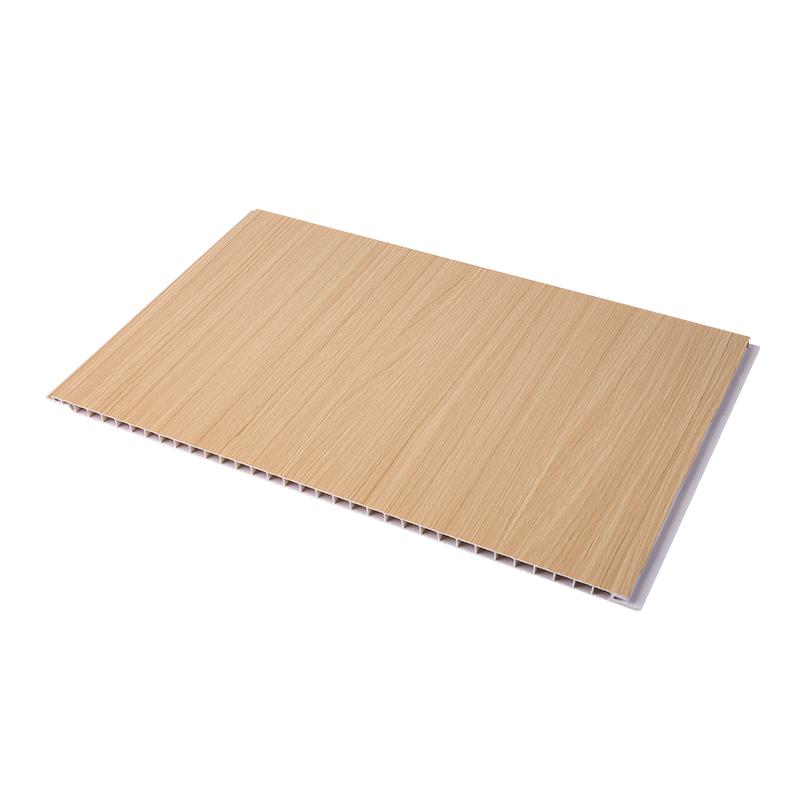 YXPVC40090 Hollow Core Waterproof PVC Wall Panel for Interior UseThis 9 mm hollow core PVC panel resists moisture with closed-cell construction and weighs about 35 percent less than solid panels. Its 40 cm width and pre-formed holes make installation quick, ideal for humid residential areas.View Product →
Installation note: PVC panels still need proper joint sealing in shower zones. Unsealed seams allow steam behind the panel; trapped moisture, not the panel itself, is the usual cause of problems in humid rooms.
Where SPC Wall Panels Fit Best
SPC wall panels fit high-traffic commercial zones, large-format walls, elevator lobbies, and any interior where flatness, dimensional stability, and impact resistance are non-negotiable.
The limestone-filled core gives SPC panels a solid, board-like feel and locks them flat across long runs. Corridors with luggage carts, school hallways with backpack impacts, and retail walls with display fixtures all punish soft PVC surfaces. SPC panels hold their plane, resist denting, and keep seams tight when the substrate does not shift.
For a deeper look at panel sizes, edge profiles, and project planning, this SPC wall panel selection guide covers the specification steps in detail. For large-format commercial walls, SPC wall cladding with a rigid core is available in panel widths that reduce visible seams and shorten installation time.
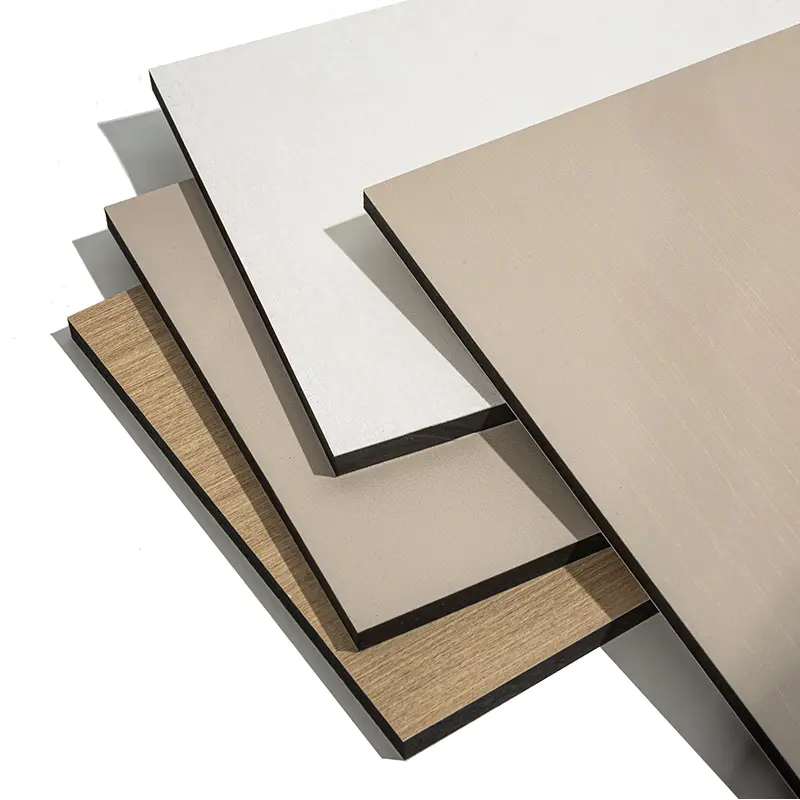
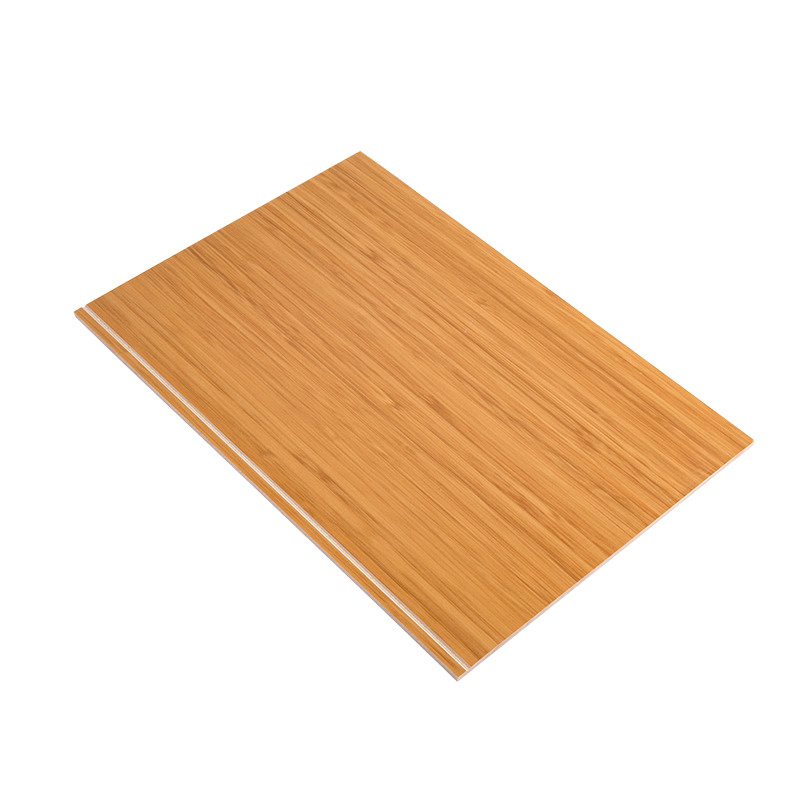 YXSPC604 Modern SPC Wall Panel for Seamless Interior CoveringThis 4 mm stone-plastic composite panel offers durable, waterproof, and scratch-resistant surfaces in a 60 cm width with seamless splicing. It suits large commercial walls where reduced seams and quick installation matter.View Product →
PVC-friendly zones
- Secondary bathrooms and powder rooms
- Bedrooms, wardrobe rooms, and living-room feature walls
- Ceilings and soffit accents
- Renovations with uneven plaster behind the panel
SPC-friendly zones
- Hotel corridors, elevator lobbies, and reception walls
- Offices, meeting rooms, and retail display walls
- Schools, hospitals, and other public interiors
- Large-format flat walls where seams must stay tight
If the wall will be touched, bumped, or loaded, choose SPC. If the wall will be wet, hidden, or on a tight budget, choose PVC.
Side-by-Side Performance by Interior Zone
Performance differences appear when each material meets a specific interior condition: moisture, point loads, thermal movement, or acoustic demand.
| Interior condition | PVC rating | SPC rating | Practical note |
| Humidity and water exposure | Excellent | Excellent | Both are waterproof; seam sealing decides the outcome |
| Point impact and luggage bumps | Fair | Excellent | PVC dents under hard edges; SPC stays flat |
| Long unsupported wall spans | Fair | Excellent | SPC bridges uneven or wide substrates |
| Temperature swings near windows | Moderate | Good | PVC expands more with heat gain |
| Acoustic insulation | Good | Better | SPC mass reduces sound transfer |
| Decorative realism | Good | Very good | Both use wood-grain films; SPC often has deeper embossing |
Use the rating as a specification guide, not an absolute promise. "Excellent" means the material can hold the wall surface flat for years under that condition, provided the installation follows the manufacturer's substrate and sealing requirements.
Cost, Installation, and Lead Time
SPC typically costs 15 to 30 percent more than PVC on materials alone, but faster installation, fewer callbacks, and lower thermal movement can close that gap in commercial work.
The price per square meter depends on panel width, surface film, wear layer, and edge profile. A 4-millimeter SPC panel with a printed wood film costs more than a 6-millimeter foamed PVC panel because limestone content and heavier formulation raise raw material cost. Installation labor moves in the opposite direction: large-format SPC panels cover wall area quickly, while PVC panels demand more cutting and joint treatment on complex layouts.
- Panel width and length: larger formats reduce labor hours.
- Surface finish and embossing depth: deeper textures cost more in both materials.
- Substrate condition: SPC needs flatter walls and may require leveling compound.
- Trim, edge profiles, and accessories: complete the installed-system cost.
For budget-driven residential renovations, a standard interior PVC panel such as the YXPVC308 series gives a balanced entry point without the density premium of SPC.
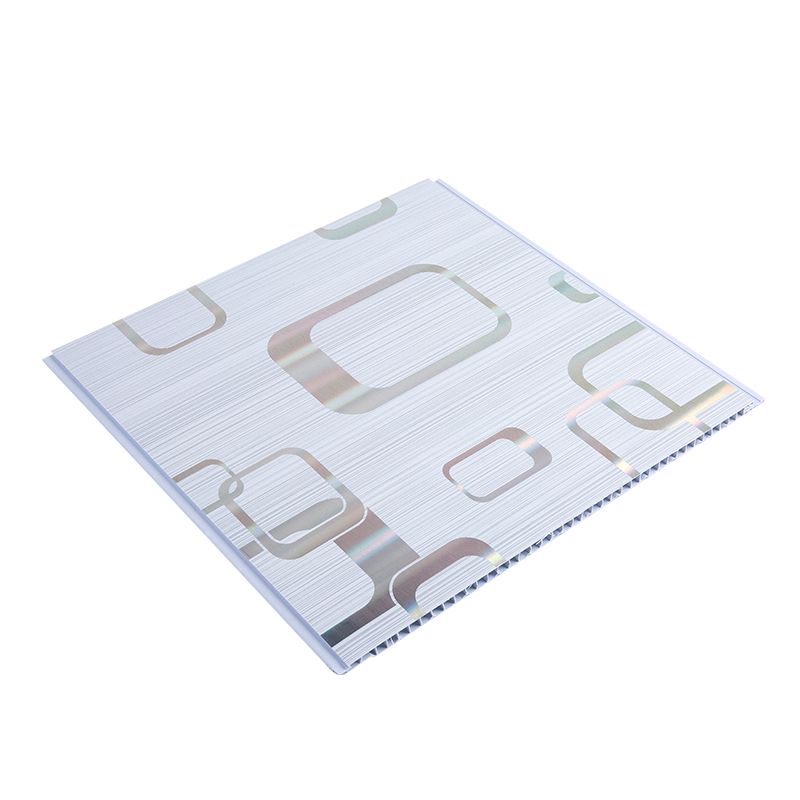 YXPVC308 Printable PVC Wall Cladding for Custom Interior DecorationThis 8 mm PVC panel features a printable surface for custom graphics and a 30 cm width with pre-spaced holes for fast mounting. Its waterproof, low-absorption substrate works well in kitchens and bathrooms.View Product →
Installed-cost reality: a cheaper panel with callbacks and replacements rarely stays cheaper. Price the whole wall assembly, including substrate prep, trim, and one service visit, before making the final call.
Selection Framework: How to Match Material to Application
Matching material to application comes down to four questions: exposure to water, risk of point impact, substrate flatness, and the budget for callbacks.
- Confirm water exposure. Both materials withstand humidity, but PVC's softer core needs sealed joints in direct splash zones.
- Assess point loads. Luggage carts, chairs, and display fixtures favor SPC's rigid core.
- Check substrate flatness. If existing walls deviate more than 5 millimeters over 2 meters, PVC conforms better; SPC requires leveling.
- Evaluate thermal range. Walls near large windows or uninsulated exteriors should favor SPC's lower expansion.
- Compare installed cost. Add substrate preparation and labor to the panel price, not just the material quote.
The most reliable specification is often a split: PVC for wet or low-traffic rooms, SPC for visible, touched, and loaded walls. That mix controls cost without compromising the surfaces guests and occupants actually notice.
Frequently Asked Questions
Can PVC wall panels be used in bathrooms?
Yes. PVC wall panels are inherently waterproof and perform well in shower surrounds and bathroom walls when joints are sealed and ventilation is adequate. For commercial washrooms with heavy daily use, SPC adds dimensional stability but is not a replacement for correct installation.
Are SPC wall panels stronger than PVC panels?
SPC panels are denser and more rigid because of their limestone-based core. They resist dents from point impacts and handle temperature swings better than foamed PVC, which makes them the stronger option for corridors, lobbies, and other high-traffic interiors.
Which material is more affordable for a whole-room renovation?
PVC panels are more affordable on material cost, usually 15 to 30 percent lower than SPC for a comparable visual finish. SPC becomes more competitive when the comparison includes substrate preparation, installation time, and the risk of callbacks in demanding zones.
Can one material cover an entire project?
One material can cover a project, but that usually means over-specifying in some areas and under-specifying in others. The practical pattern is PVC for wet and low-impact rooms and SPC for high-visibility, high-traffic surfaces.
Specifier tip: order samples of both cores, test fit them on the actual substrate, and check the panel edges for film thickness before committing to a full order. That 15 minutes of testing prevents the most costly specification errors.