+86-18367343973

 English
 Español
 عربى
عربى
Article Directory
- 1 Start with the Substrate: PVC, WPC, or SPC?
- 2 Fire Performance and Emission Limits Are Non-Negotiable
- 3 Moisture Resistance Decides Where Each Panel Can Be Installed
- 4 Installation Speed Directly Affects Revenue Loss
- 5 Surface Realism and Finish Quality Define the Guest Experience
- 6 Impact Resistance and Long-Term Maintenance Shape Life-Cycle Cost
- 7 Verify the Supplier's Project Delivery Capability
- 8 Frequently Asked Questions
A 200-room hotel renovation covers roughly 10,000 square meters of wall surface across guestrooms, corridors, and public areas. At this scale, the wall panel specification drives fire compliance, construction schedule, guest perception, and the maintenance budget for the next five years.
This guide gives procurement teams, interior designers, and contractors a practical evaluation framework: substrate choice, fire and emission performance, moisture resistance, installation speed, surface realism, durability, and supplier delivery capability. Apply the list before comparing panel prices.
Scale check: a difference of US$2 per square meter in panel price equals roughly US$20,000 on a 10,000 sq m project, before labor, downtime, or repairs are counted.
When shortlisting, review the full wall panel range first. Manufacturers that control both substrate formulation and surface finishing within one production system tend to deliver more consistent batches across a project.
Start with the Substrate: PVC, WPC, or SPC?
The substrate governs dimensional stability, impact strength, moisture behavior, and installed cost, so it is the first filter in wall panel selection.
Most hotel-grade panels are built on one of three polymer platforms. PVC panels are lightweight and fully waterproof, making them common in guestroom bathrooms and midscale projects. WPC panels combine recycled wood fiber with polymer for better rigidity and deeper surface realism, which suits public areas and feature walls. SPC panels use a limestone-polymer composite core that is the most dimensionally stable of the three, so it works well in large-format panels and high-traffic locations.
| Property | PVC panel | WPC panel | SPC panel |
| Core composition | Foamed polyvinyl chloride | Wood fiber plus polymer | Limestone plus polymer |
| Typical density (g/cm3) | 0.5 to 0.7 | 0.6 to 1.0 | 1.5 to 1.9 |
| Moisture behavior | Fully waterproof | High humidity resistant, seal edges | Minimal expansion in wet conditions |
| Impact resistance | Moderate | Good | High |
| Best hotel fit | Bathrooms, budget guestrooms | Corridors, F&B, feature walls | Large-format walls, trolley-heavy zones |
| Relative installed cost | Low | Medium | Higher |
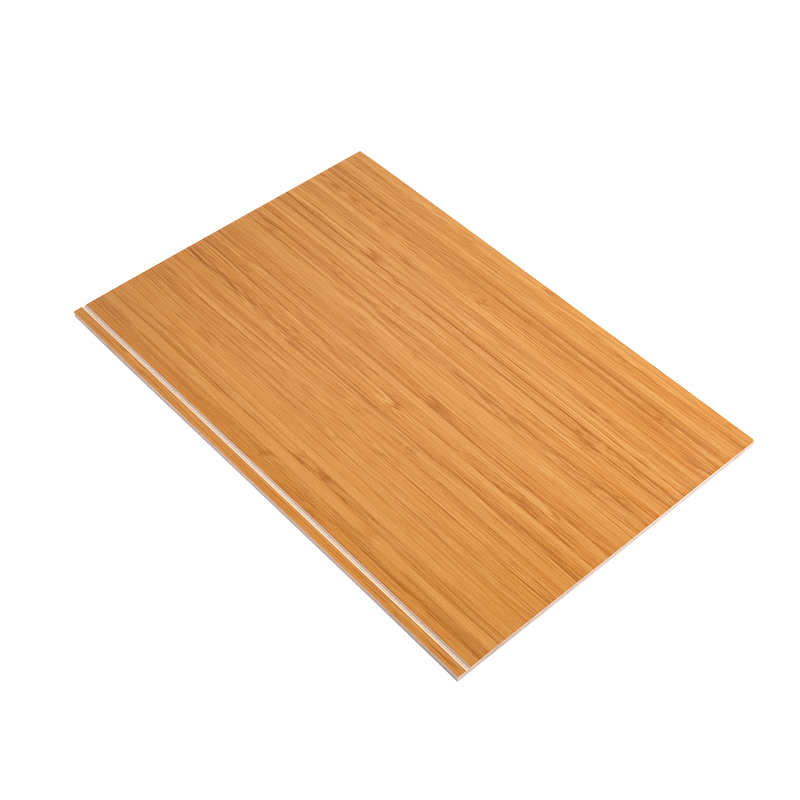 Modern Stone-Plastic Composite Wall Panel for High-Traffic AreasThis SPC wall panel uses a limestone-polymer core for dimensional stability, making it suitable for hotel corridors and lobbies where trolleys and carts operate daily. Its sound insulation and scratch resistance support long-term use.View Product →
For guestroom walls, a medium-density WPC panel often provides the best balance of acoustic comfort and surface quality. For corridors and lobby areas where luggage trolleys and housekeeping carts operate daily, specify SPC.
Field note: panels with a dense structured core resist telegraphing of substrate imperfections. On uneven hotel walls, thin hollow profiles are more likely to show surface flex at joints.
Fire Performance and Emission Limits Are Non-Negotiable
Hotel wall linings must meet defined reaction-to-fire classes and emission limits; a supplier that cannot produce a dated test report for the finished panel will fail commissioning regardless of appearance.
For commercial and hospitality projects, the classification is usually taken from the finished panel assembly. Class B-s1,d0 per EN 13501-1 is commonly requested for escape routes and lobbies, with smoke production and burning droplets written into the specification. Formaldehyde emission should be verified against E1 limits, and PVC products should be checked for plasticizer content where indoor air quality requirements are strict.
Reaction to fire describes how a material contributes to fire growth in its end-use position. Class B means limited contribution; s1 means low smoke production; d0 means no burning droplets in the defined test period. Ask for the test report covering the finished panel with its surface coating and backing, not a certificate for the raw resin.
In practice, resin-level certificates do not cover the additives, surface coating, or backing used in the final product. A WPC panel with a high wood content, for example, may pass as a raw composite but behave differently when the surface coating or edge treatment changes the burning behavior.
Compliance tip: attach the dated reaction-to-fire and formaldehyde test reports to the tender document. Panels without verified reports are the first items rejected at site inspection.
Moisture Resistance Decides Where Each Panel Can Be Installed
Bathrooms, laundry rooms, and exterior-adjacent walls create continuous humidity loads, so the waterproofing of the panel core and the joint method must match the moisture profile of each hotel zone.
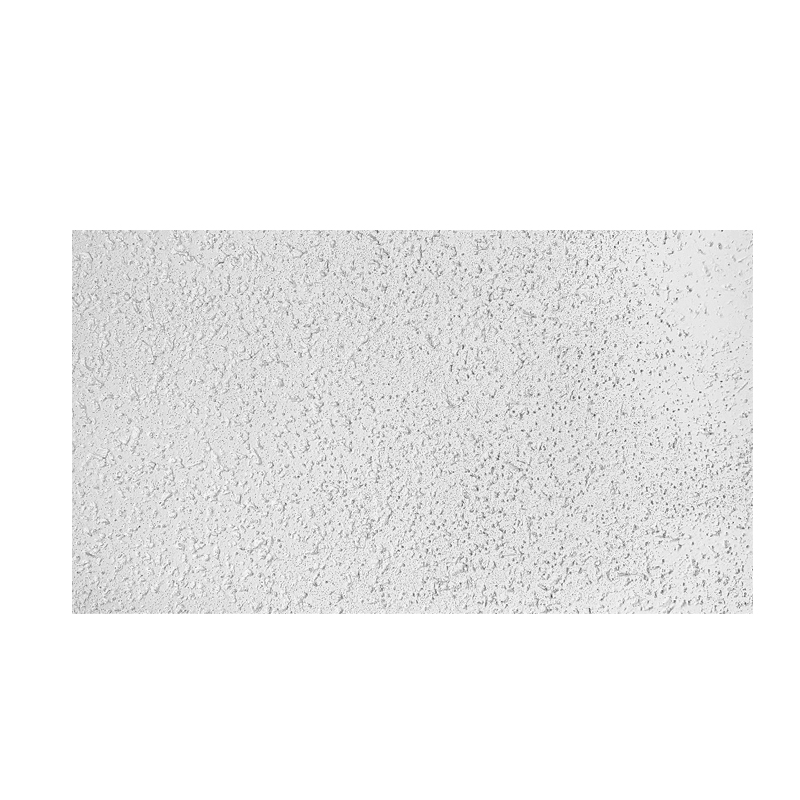
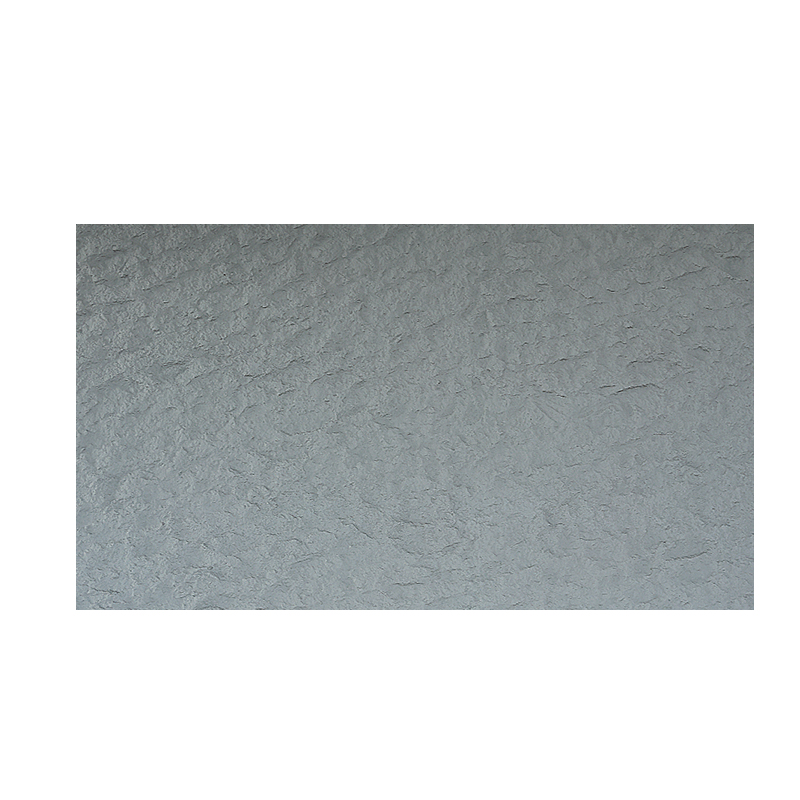
PVC wall panels are waterproof and can run directly into shower enclosures when joints are sealed with compatible trim. WPC panels tolerate high humidity but need edge sealing in continuously wet zones; the exposed cut edges are where moisture ingress starts. Flexible stone veneer with freeze-thaw-rated backing suits exterior facades and semi-covered terraces, where the panel must survive temperature swings and wind-driven rain.
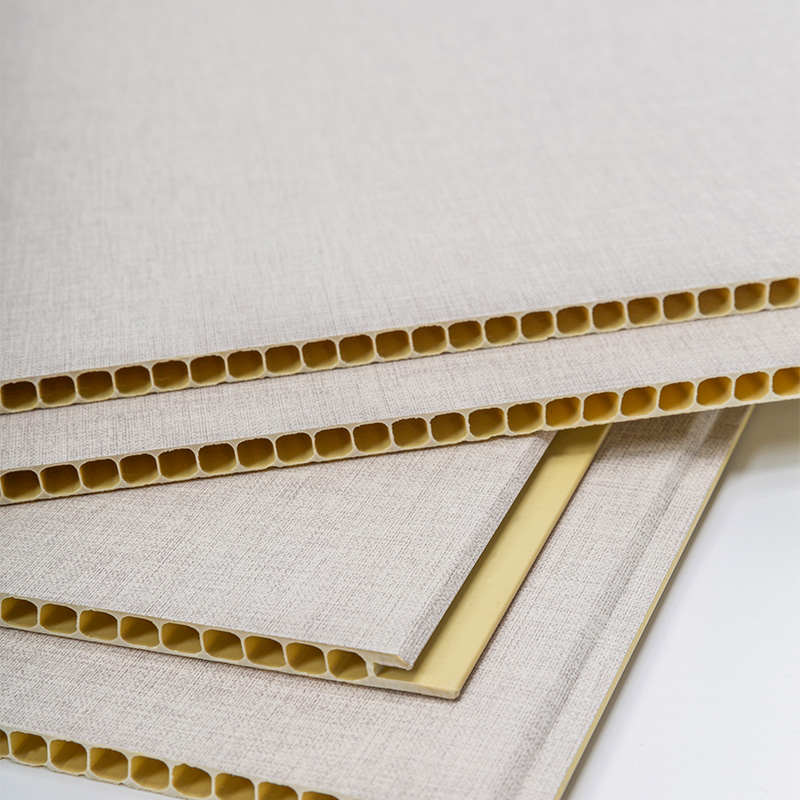
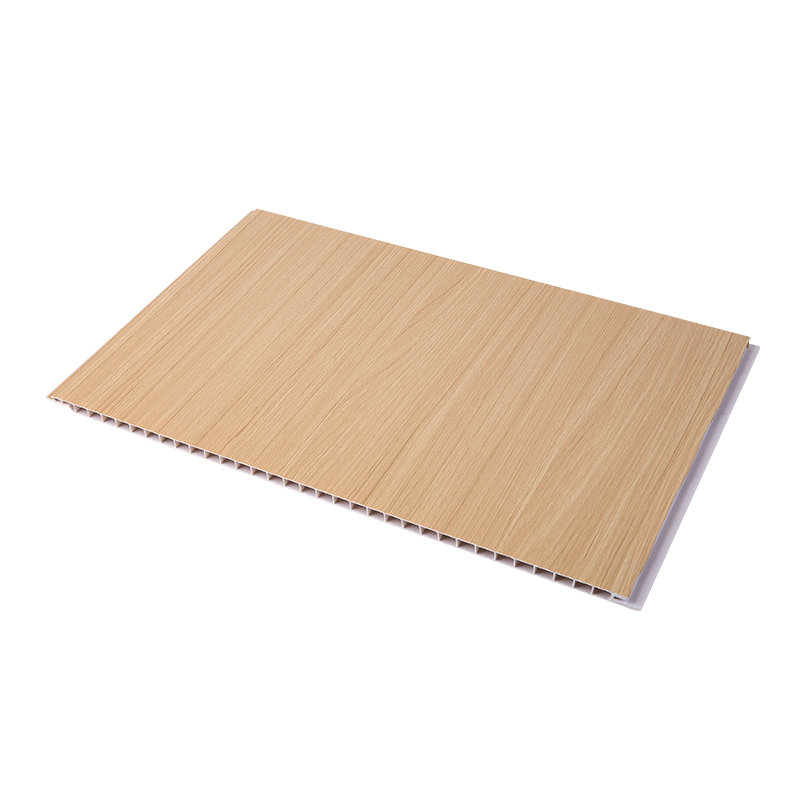 Lightweight Hollow-Core Waterproof PVC Wall PanelThis 9 mm PVC panel features a hollow core that reduces weight by about 35% while maintaining impact resistance, and its closed-cell formulation with water absorption below 0.1% suits humid guestroom bathrooms. The square hole pattern allows quick screw or nail mounting without pre-drilling.View Product →
Zone checklist: use full-waterproof PVC in guest bathrooms and pool changing rooms. Use WPC with sealed edges in spa areas and corridors next to wet zones. Use freeze-thaw-rated flexible stone on exterior cladding and roof terraces.
Installation Speed Directly Affects Revenue Loss
Dry-fix panel systems eliminate wet-cure waiting time, which can shorten a hotel renovation schedule by two to three weeks and reduce lost room revenue.
A conventional tiled bathroom wall requires substrate preparation, adhesive, and a 24-to-48-hour cure before grouting. Interlocking PVC panels and WPC panels with concealed clips install directly onto leveled battens or prepared substrate. A 100-room guestroom floor can be re-clad in roughly ten working days with a six-person crew using panel systems.
45 sq mPVC panels per worker per day
30 sq mWPC panels per worker per day
10 sq mCeramic tile with adhesive and grout
0 daysWet-cure waiting for click-fit panels
Installed wall finish area per worker-day (sq m)
Indicative installed area per worker per day from typical hotel renovation projects. Actual rates vary with substrate condition, panel format, and fixing method.
Traditional sequence per guestroom floor
- Strip existing wall covering
- Patch and skim coat
- Wait for each coat to cure
- Sand and prime
- Apply paint or wallpaper
Total: 7 to 10 days
Panel sequence per guestroom floor
- Strip existing wall covering
- Level or batten the substrate
- Fix panels with clips or interlock
- Install edge trims
Total: 2 to 3 days
Surface Realism and Finish Quality Define the Guest Experience
Guests inspect wall surfaces at arm's length, so print depth, embossing alignment, and coating durability decide whether a panel reads as premium or cheap.
Evaluate panels under hotel lighting rather than in a showroom. Check that the embossed texture follows the printed grain, that the gloss matches the design intent, and that the UV coating resists yellowing on sun-exposed corridors. WPC fluted panels are a standard choice for lobby feature walls because the vertical rhythm of the flutes hides joint lines and adds acoustic diffusion.
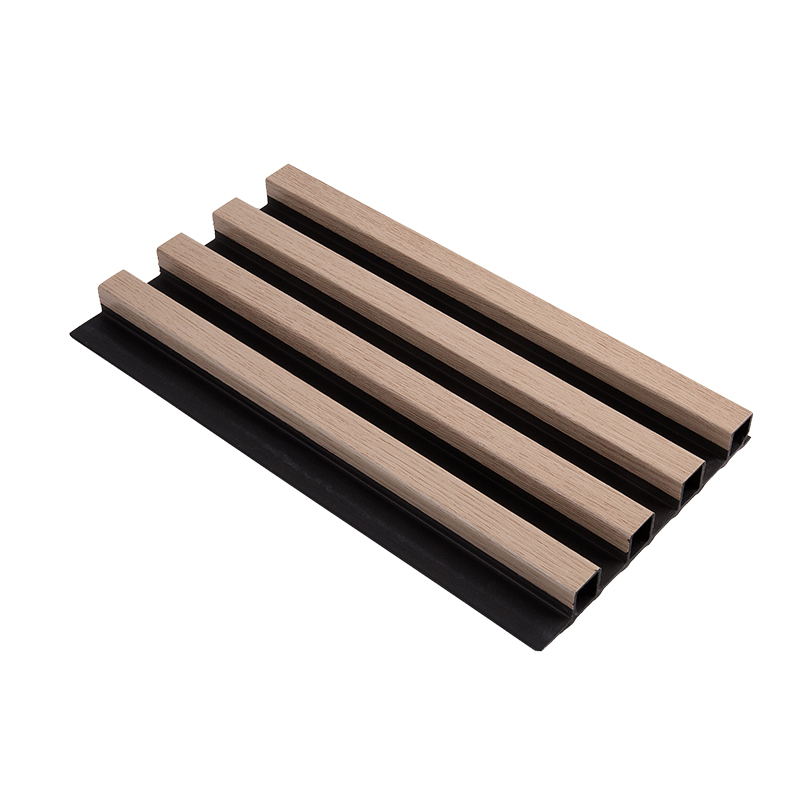 Textured WPC Fluted Panel for Lobby Feature WallsThis grooved WPC panel offers a 20x19 mm vertical fluted pattern that hides joints and adds acoustic diffusion, ideal for lobby feature walls. Its lightweight, waterproof, mildew-resistant and termite-resistant construction requires no painting or sealing, reducing maintenance over a ten-year operating cycle.View Product →
Specifier's rule: choose a wood-grain panel only when the printed grain and the embossed texture are aligned. Misaligned embossing makes a premium surface look like film-wrapped board within weeks of installation.
Impact Resistance and Long-Term Maintenance Shape Life-Cycle Cost
Hotel walls are struck by luggage trolleys and housekeeping carts daily, so surface hardness, core density, and repairability determine what a wall actually costs over a ten-year operating cycle.
SPC panels resist indentation better than foamed PVC in trolley-heavy zones. WPC offers a middle ground with good scratch resistance when the surface carries a UV-cured finish. For maintenance, require a cleanable topcoat and a documented replacement path for damaged planks; replacing one board is far cheaper than repainting an entire wall every three years.
- Is the surface cleanable with neutral-pH commercial detergents without dulling the finish?
- Can a damaged plank be removed and replaced without dismantling adjacent panels?
- Does the supplier maintain dye-lot continuity for future orders and renovations?
- What is the stated warranty against edge swelling and surface delamination?
Life-cycle note: a panel that costs US$1 more per square meter but survives a ten-year cycle without repainting will usually beat a cheaper board that needs three repaint cycles in the same period.
Verify the Supplier's Project Delivery Capability
A panel that arrives late, with batch color drift, or with damaged edges will stop a site; confirm production lead times, packaging, and batch consistency before you issue a purchase order.
Work with manufacturers that control formulation and finishing in-house, because that is where batch-to-batch color stability is decided. Haining Yunxi New Material Technology Co., Ltd. manufactures PVC, WPC, SPC, and flexible stone wall panels under a coherent model-number system, and has delivered panel systems to hotel chains including Atour and Ji Hotels. That kind of project reference is more useful to a procurement team than a catalog alone.
Order checklist: request a dated reaction-to-fire test report; approve color samples from the actual production lot; agree edge-protection packaging for ocean or road freight; and confirm a written lead time for re-orders before the site works begin.
Frequently Asked Questions
The answers below cover the questions procurement teams most often ask during wall panel tenders.
What wall panel material is best for hotel guestrooms?
WPC panels offer the best combination of surface realism, acoustic comfort, and impact resistance for guestroom walls. For guestroom bathrooms and wet areas, switch to fully waterproof PVC panels with sealed joints.
Are PVC wall panels fire-rated for commercial use?
PVC is inherently flame-resistant, but the finished panel must still be tested as an assembly. For hotel corridors and lobbies, specify a product with a documented Class B-s1,d0 reaction-to-fire classification and confirm the report covers the surface coating and backing layer.
Can WPC wall panels be used in hotel bathrooms?
Yes, in moderately humid bathrooms, if the edges are sealed and the substrate is dry. For shower enclosures and pool areas with continuous water exposure, use a fully waterproof PVC panel to avoid edge swelling.
How long does it take to install wall panels in a 100-room hotel?
With a six-person crew using interlocking PVC panels, a 100-room guestroom floor is typically completed in about ten working days, compared with three to four weeks for tiled or plastered finishes, because no wet-cure waiting time is required.